The Importance of Music in the World Language Classroom
Henry Wadsworth Longfellow said, “Music is the universal language of mankind.” As language teachers, we wear many hats: we teach students about language, culture, history, art, literature, and yes, music as well! It’s important to incorporate music into your French, Spanish, or Italian language lessons for several reasons that I’m going to delve into in this blog post. I’ll share how you can find awesome music to share with your students (both contemporary and classic hits from decades past), and how you can either create a music unit or incorporate music into your already-existing lesson plans. Keep reading to learn more!
Benefits of Using Music in the World Language Classroom
How is it possible that we remember, with pretty strong accuracy, the lyrics to songs that we heard years ago? I struggle to remember the first and last names of all 125 of my students, and I see them every other day! But when I play a song that I was obsessed with ten+ years ago? The words flow out of my mouth effortlessly!
There’s a pretty strong connection between music and language retention. When we listen to music that we like, our brains hold onto those words by creating enduring connections. Music acts like a mnemonic device, and of course, the constant repetition involved in replaying songs that we love over and over helps the song lyrics stick.
We want to use music in our World Language classes because it helps students passively acquire important vocabulary and grammar structures in a fun and engaging way that doesn’t feel like work—and as language teachers, we must capitalize on these opportunities to provide students with compelling comprehensible input and listening comprehension practice that don’t really feel arduous or cumbersome for our students.
Another important aspect to consider is the cultural competency piece. Music plays a significant role in culture, and songs oftentimes reflect the cultural values, traditions, or current events from the country from which it originates. Music also offers us an opportunity to expose students to different registers of language (e.g., slang) as well as regional dialects and accents.
The last reason I’ll give for using music in the World Language class is to promote improved clarity in pronunciation and active language use. Your students may not sing along to these songs in class, but I can guarantee you they will download them on their phones, listen to them on the bus, and yes, sing them when they’re alone (and no one’s listening!).
I hear my students singing the songs that I play for them as they’re changing classes in the hallway, at the end of the day as they’re packing up their belongings at their lockers, etc. And whenever we provide students with an opportunity to use the target language actively in their lives, we reinforce the critical belief that the language they’re learning in the classroom DOES connect to their lives outside of our French, Spanish, or Italian classrooms.
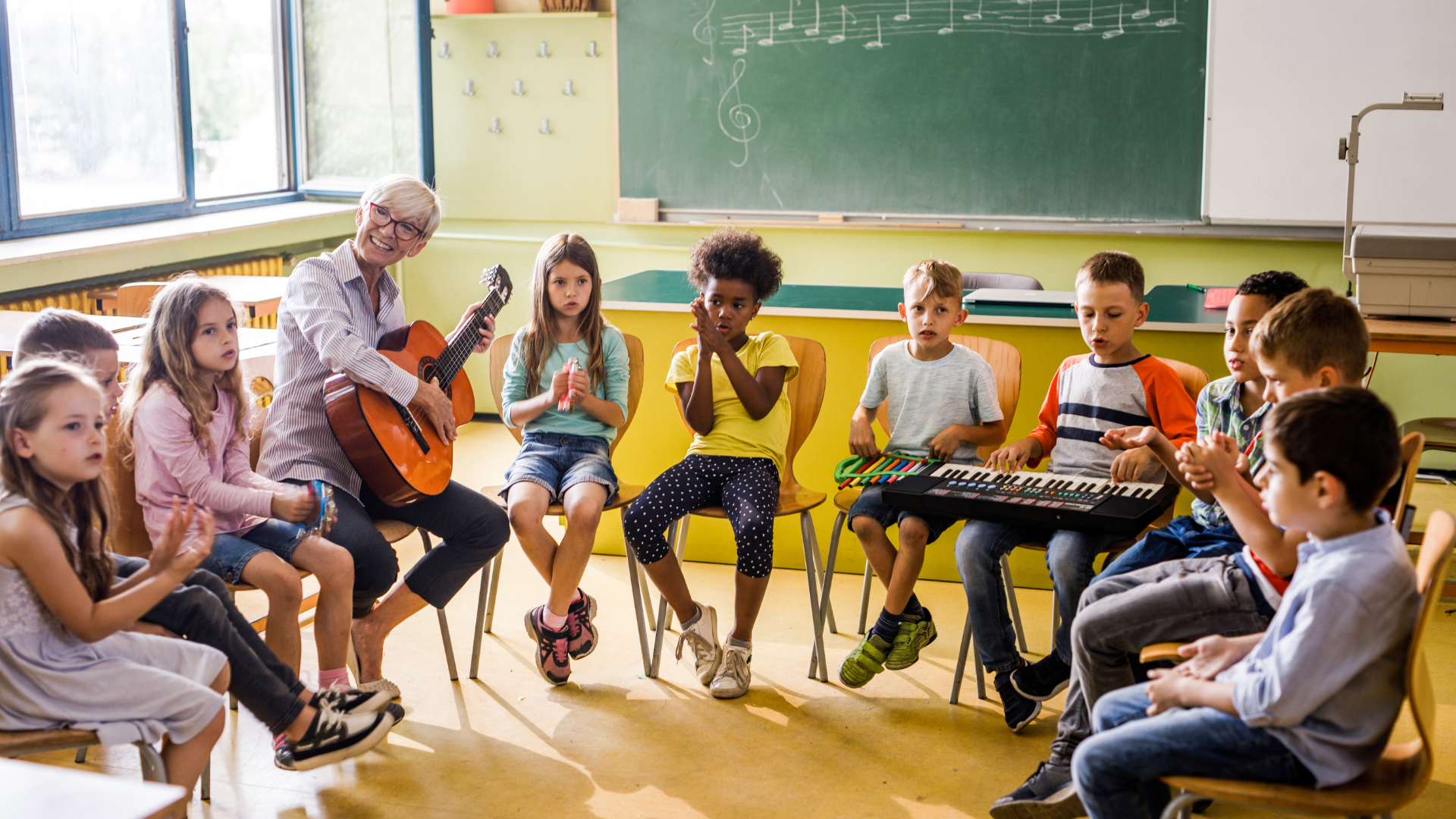
How to Find Relevant Songs & Artists
I want you to consider two factors when choosing songs and artists for your language students: first, consider introducing students to both classic AND contemporary artists / songs. As a French teacher, I want my students to listen to the hottest songs that young French speakers around the world are also listening to, but I also want them to know Édith Piaf, Céline Dion, Jacques Brel, etc. Consider alternating between classic and contemporary artists.
Second, consider alternating the music styles you introduce your students to. Not all of your students will enjoy pop songs, so you’ll want to incorporate various genres to ensure that you’re offering music that accounts for the diverse musical styles and preferences of your learners.
Where can you go to find music? I love Apple Music playlists. I follow a playlist called “French Hits,” and I listen to it pretty regularly. When I hear a song that I think my students will like, I add it to a separate playlist. Sometimes, I have to do a bit of research into the artist to make sure that they’re appropriate for school, and also, I like knowing the background of the artist so I have cultural material to present to students in addition to the song. You can also use Youtube to search up the latests artists.
How to Present & Organize Your Music Lessons
Consider creating a Music Unit in which you spend a majority of the time focusing on different musical styles, artists, songs, etc. You could devote a few weeks of instruction to really honing in on this cultural aspect of the target language / culture(s).
Another idea is to incorporate music into your weekly lesson plans. Maybe you have a “Music Monday” where you introduce students to a new artist each week. Or maybe it’s every other week, or once or twice a month. Find a cadence and frequency that works best for you.
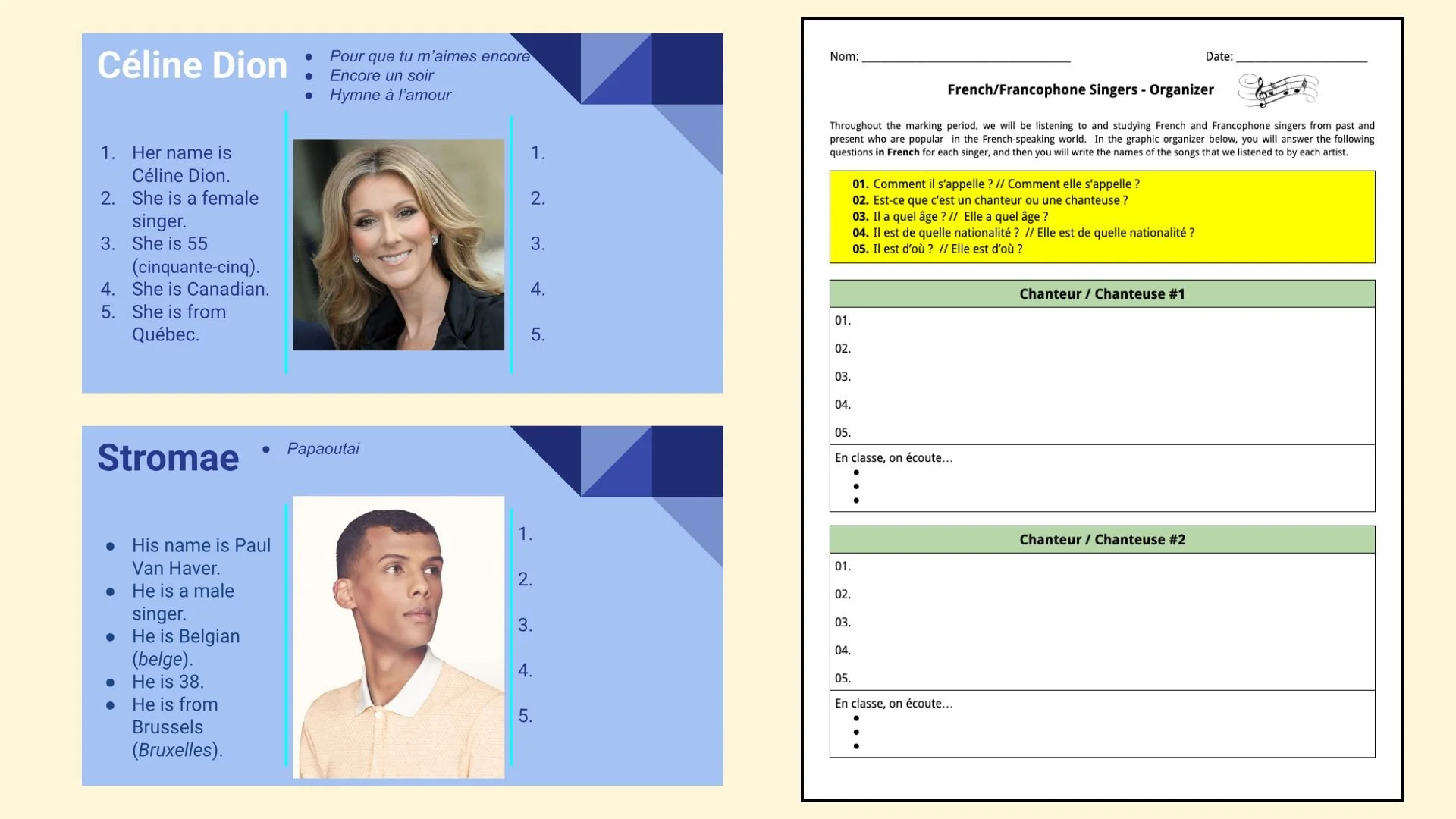
As I mentioned before, it’s a good idea to present cultural information about the artist and/or song before you play it for your students. For my first year French students, I give them a French & Francophone Singers Organizer that they store in their binders. When it’s time to learn about a new artist, I project a slideshow with a picture of the artist, some basic facts about them in English, and the song(s) that we’re going to listen to in class. Students translate the important facts into French and jot down the names of the songs that we’re going to listen to.
Pro Tip: Find interesting music videos or lyric videos on Youtube, and make sure to add the URLs to your speaker notes so that you can easily access them during class.
Keep Students On Task & Engaged
While students are listening to the song, give them something to do! Otherwise, it’s easy for them to space out or disengage, especially if they’re not particularly into the style of music or the artist themselves. Here are some quick ideas:
I give students an index card. On the front, they need to jot down every word in the target language that they heard and understood from the song. On the back, they need to jot down some words to describe how they feel about the song. (You can do a mini lesson and provide a vocabulary list with some words to describe songs—my colleague has done something like this. I believe she gives students a “chat mat” with all the vocab they need to describe songs and music preferences.)
Consider a Cloze Transcript activity. Find the lyrics to the song online, copy and paste them into a Google Doc, and then replace key words with _______’s. Students fill in the blanks as they listen.
For this type of activity, I like to have students listen first (without doing anything), and then I share the song with them via Google Classroom and have them listen a few times while completing the Cloze activity. Some students may need to listen to the song several times to fill in the blanks, so this is an activity that’s best done either independently or in pairs—I do NOT recommend doing this as a whole class.
Extension Ideas
Here are some ideas for taking your music lessons even further!
- Give students an opportunity to discover more music from the artist! Consider creating a Youtube, Apple Music, or Spotify playlist of top songs from the artist, and let your students explore the songs.
- Have students research French, Spanish, or Italian-speaking artists on their own! Have them write a one-page biography (in the target language, if appropriate) about the artist, have them list some of their favorite songs, and explain why they like them.
- Extra Credit Project Alert! I always have students asking for extra credit at the end of the quarter. And while I’m not a huge fan of extra credit in general, I’ll sometimes have students pick a song they like and perform it in class for their peers for a few extra points. They could sing the song or play an instrumental version if they’d like (students can also complete this in small groups if they’d like to combine musical talents!). You can also honor the unique creative talents of your students by having them submit other forms of multimedia/art related to the songs/artists they have selected.
- Consider language learning music apps! There are a bunch of apps out there. Here are a few to research and consider:
Lirica.io - Discover a new language, music, and culture with the world's most comprehensive language learning app!
Beelinguapp - Learn languages with parallel texts reading listening to music and audiobooks
Lingoclip - Discover a new and fun way to learn English and other languages by playing with the videos and lyrics of your favorite songs.
Sountner - Learn a new language with the power of music.
Hope this post has given you some ideas for how to incorporate music into your World Language classroom! Do you use music in your classes? If so, how do you incorporate it? I’d love to hear about it in the comments below!
Happy language teaching,
~ Michael