French, Spanish, Italian Physical Descriptions
One of the hardest topics for me to teach has been French, Spanish, and Italian Physical Descriptions - la description physique, la descripción física, la desrizione fisica, respectively! Why? Well, it’s been pretty difficult for me to find high-quality engaging teaching materials on this topic.
I have been creating teaching resources on TeachersPayTeachers (TPT) since 2017… and there’s one resource that I literally procrastinated on making for YEARS, despite the fact that I could personally benefit from the resource in my own classroom AND the fact that many World Language teachers have requested it over the years. Any guesses?
In this post, I’ll share the perks of my French (la description physique), Spanish (la descripción física), and Italian (la descrizione fisica) Physical Descriptions resources, which I designed to save you the hassle that I had to deal with for YEARS trying to find adequate teaching materials around this topic.
Continue reading for lesson ideas, and click on the thumbnails
below at any time to pick up these resources for your own classroom!
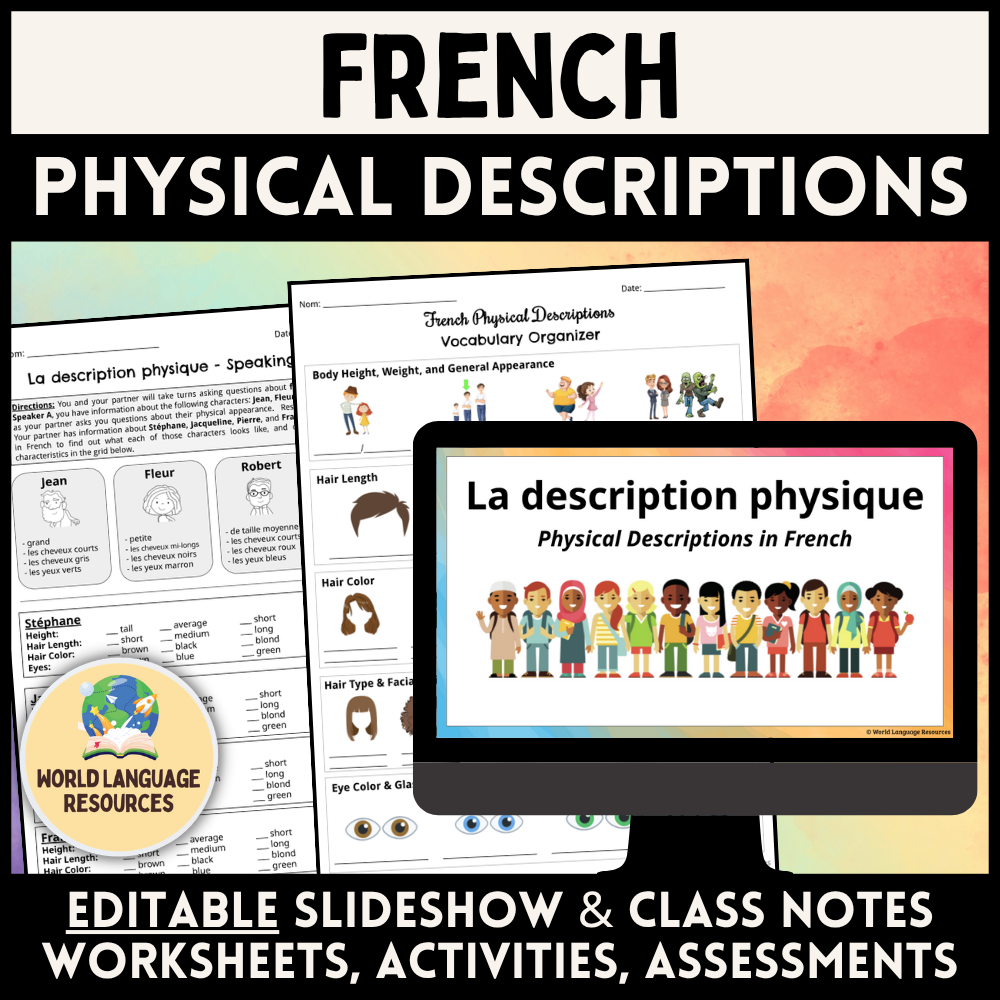
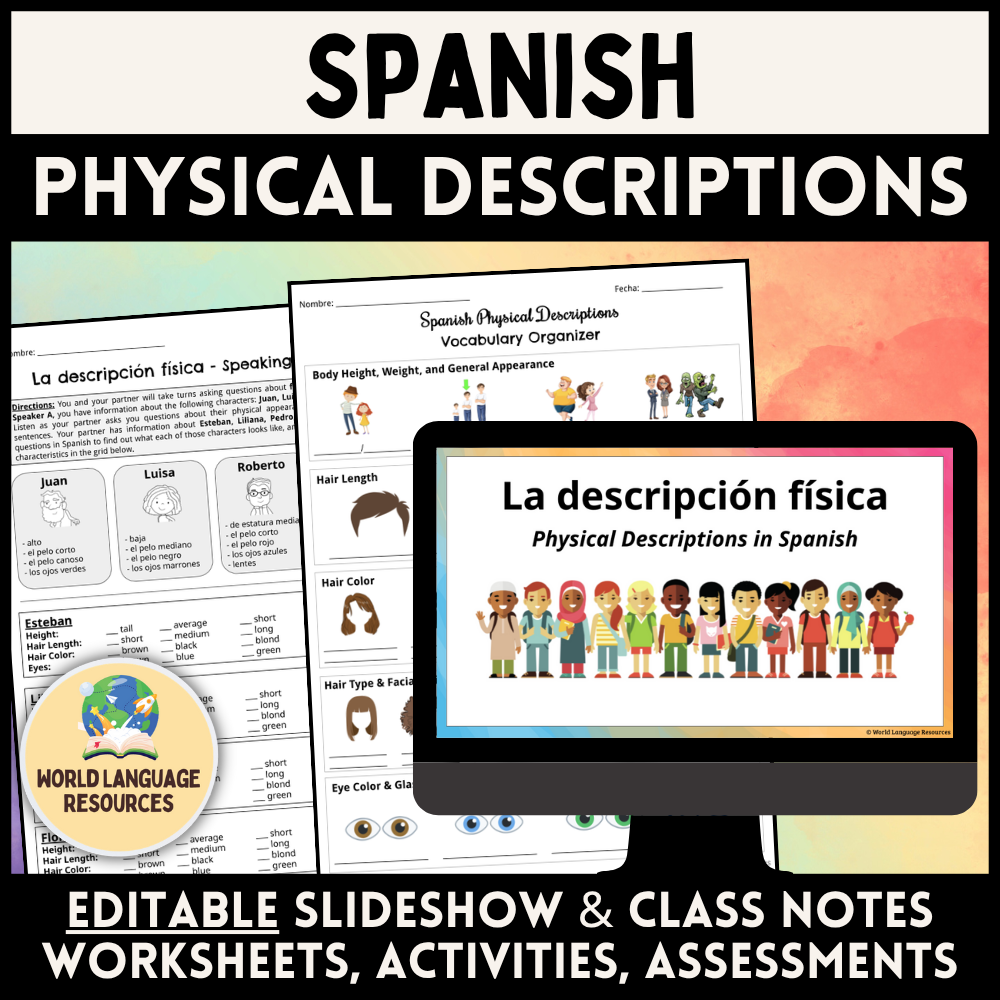
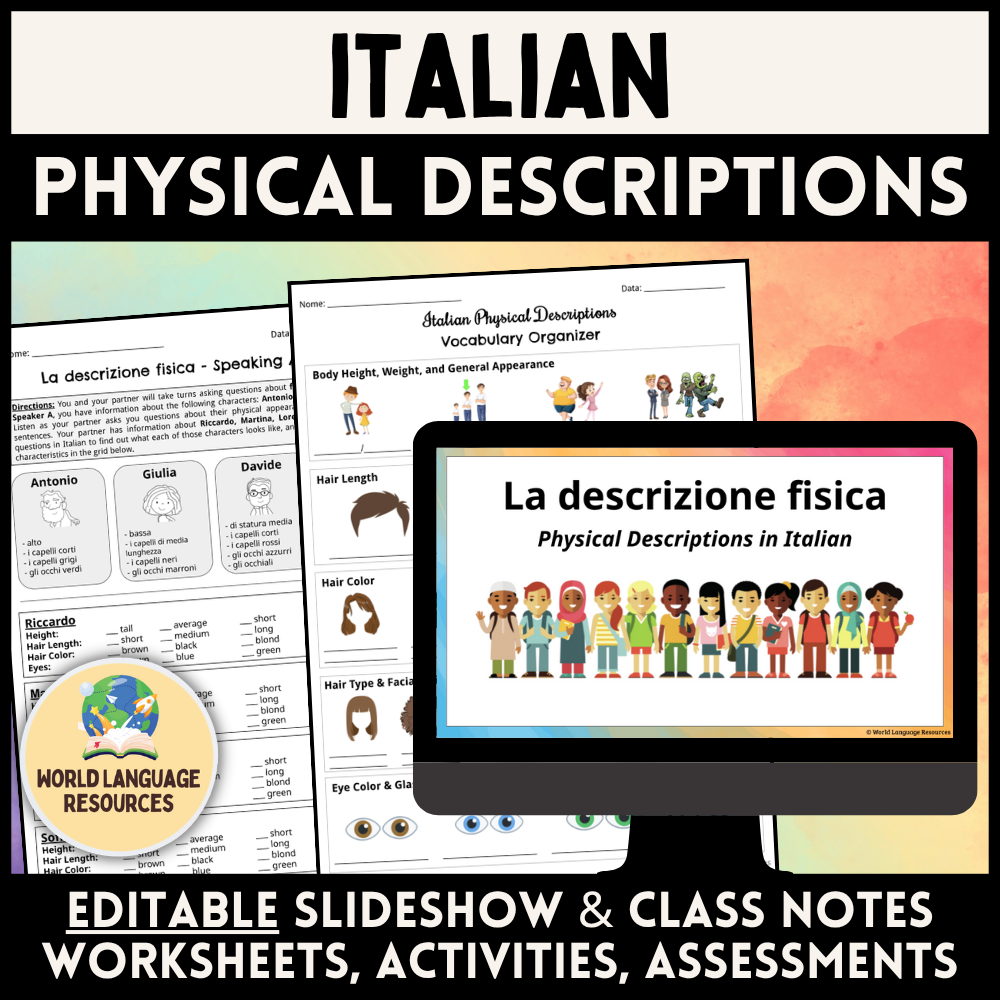
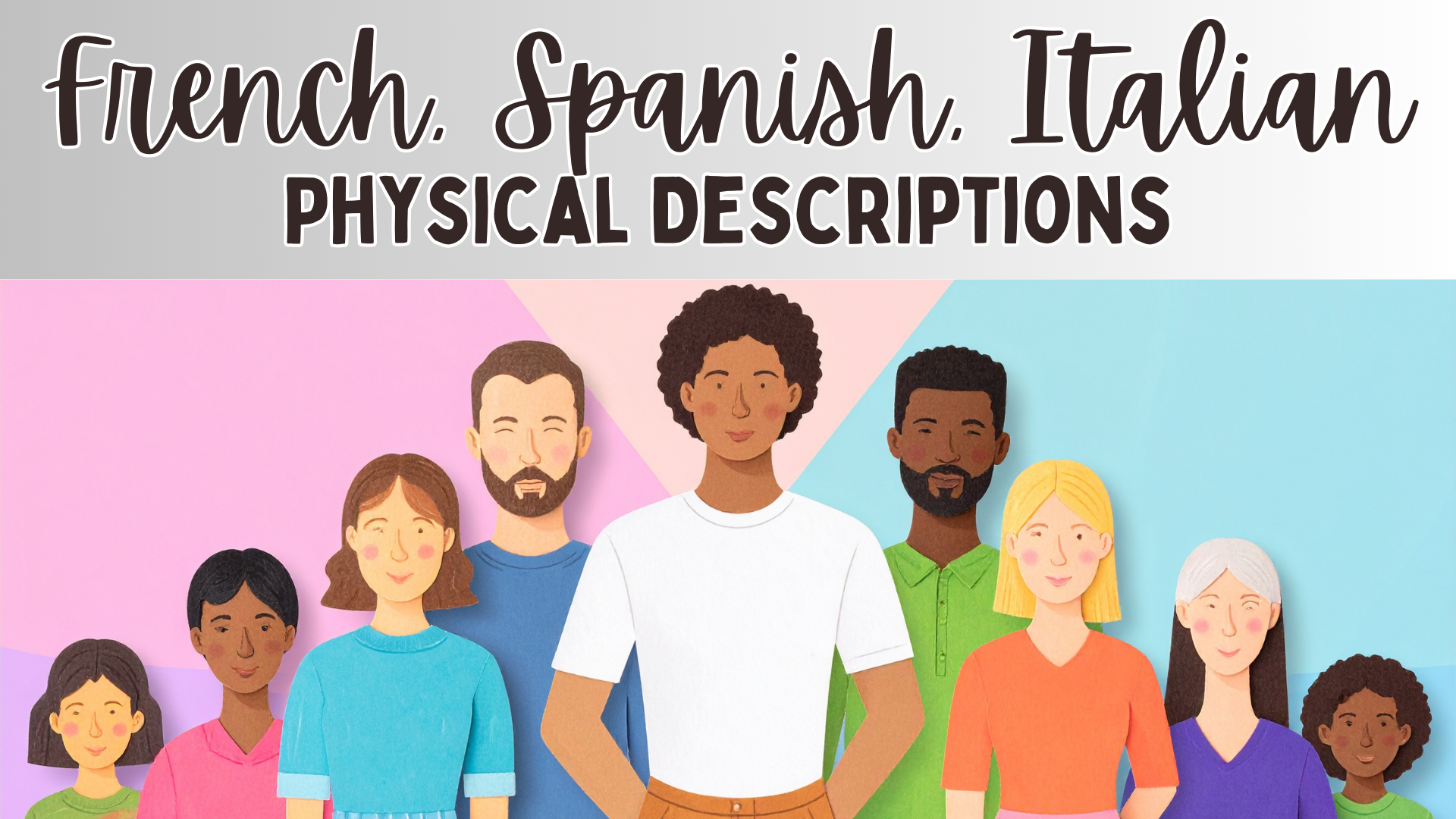
Physical Descriptions in French, Spanish, and Italian
I’ve put together a resource that will…
help you teach your students how to respond to the questions:
French: Il est comment ? / Elle est comment ?
Spanish: ¿Cómo es él? / ¿Cómo es ella?
Italian: Com'è lui? / Com'è lei?
help your students learn essential vocabulary and grammar on this theme
provide your students with ample opportunities to practice physical descriptions
give your students rigorous proficiency-oriented tasks to help them improve their reading, writing, listening, and speaking skills
and lastly, provide you with the tools you need to assess student learning
What Descriptors Are Included?
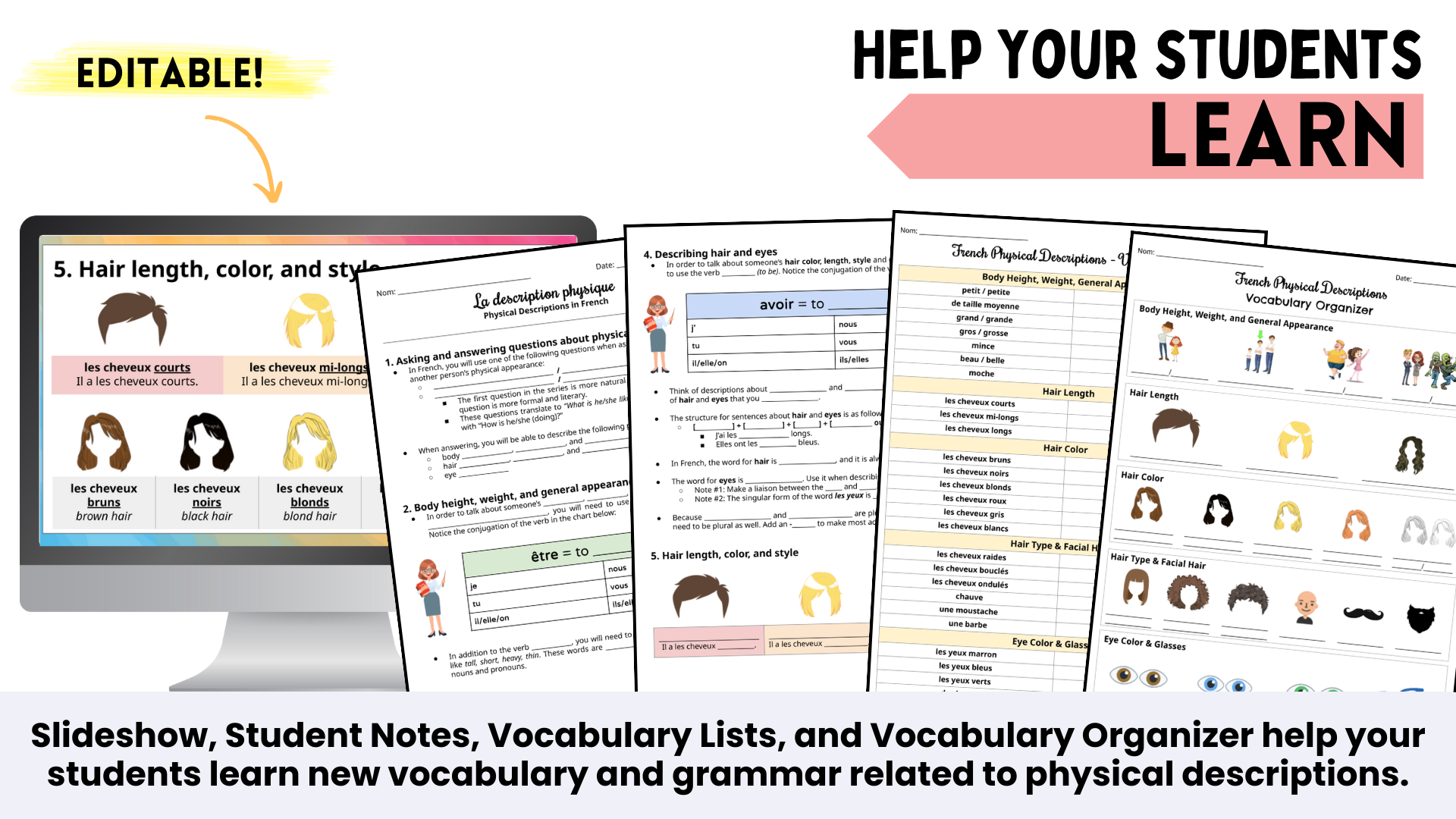
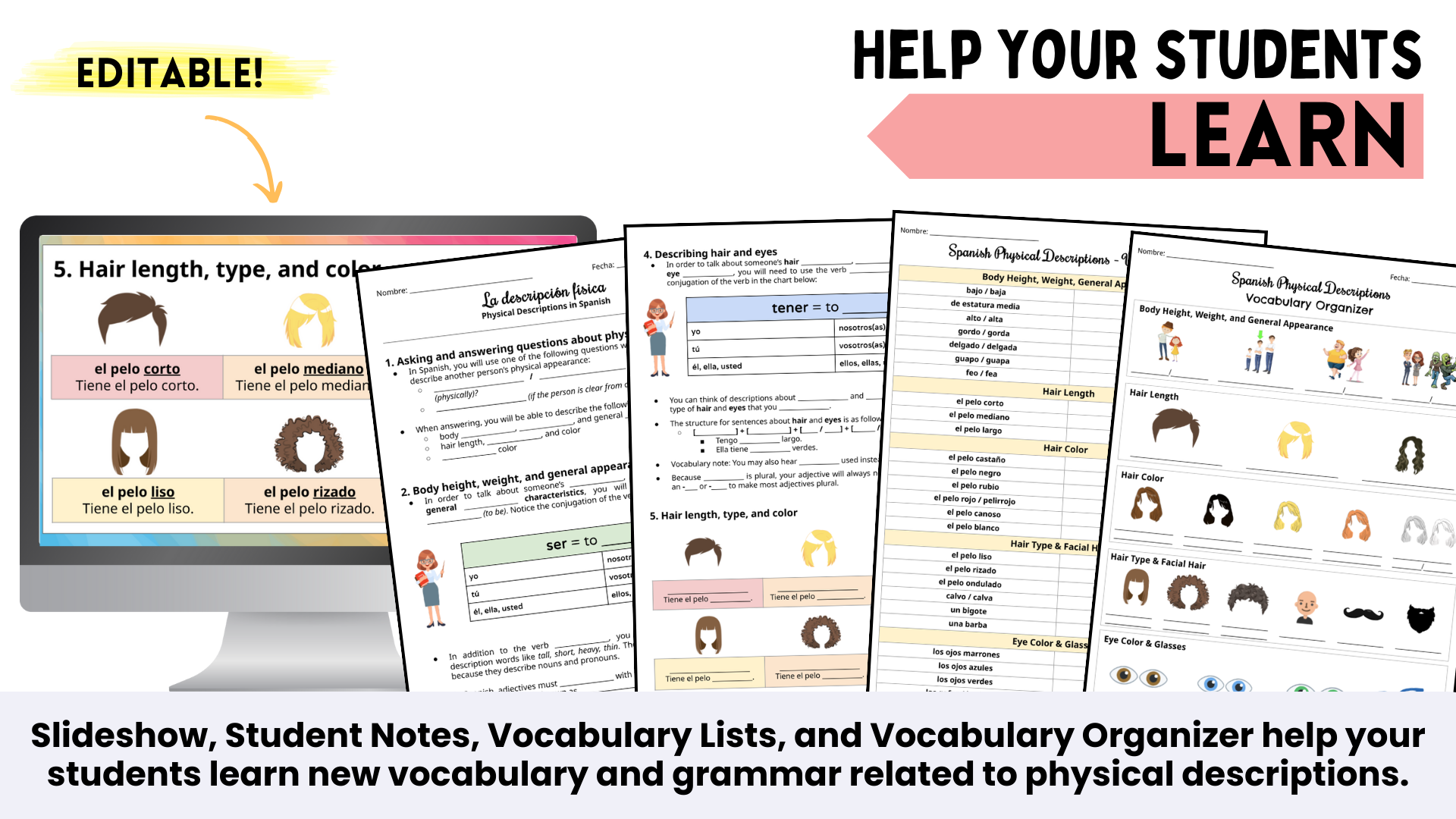
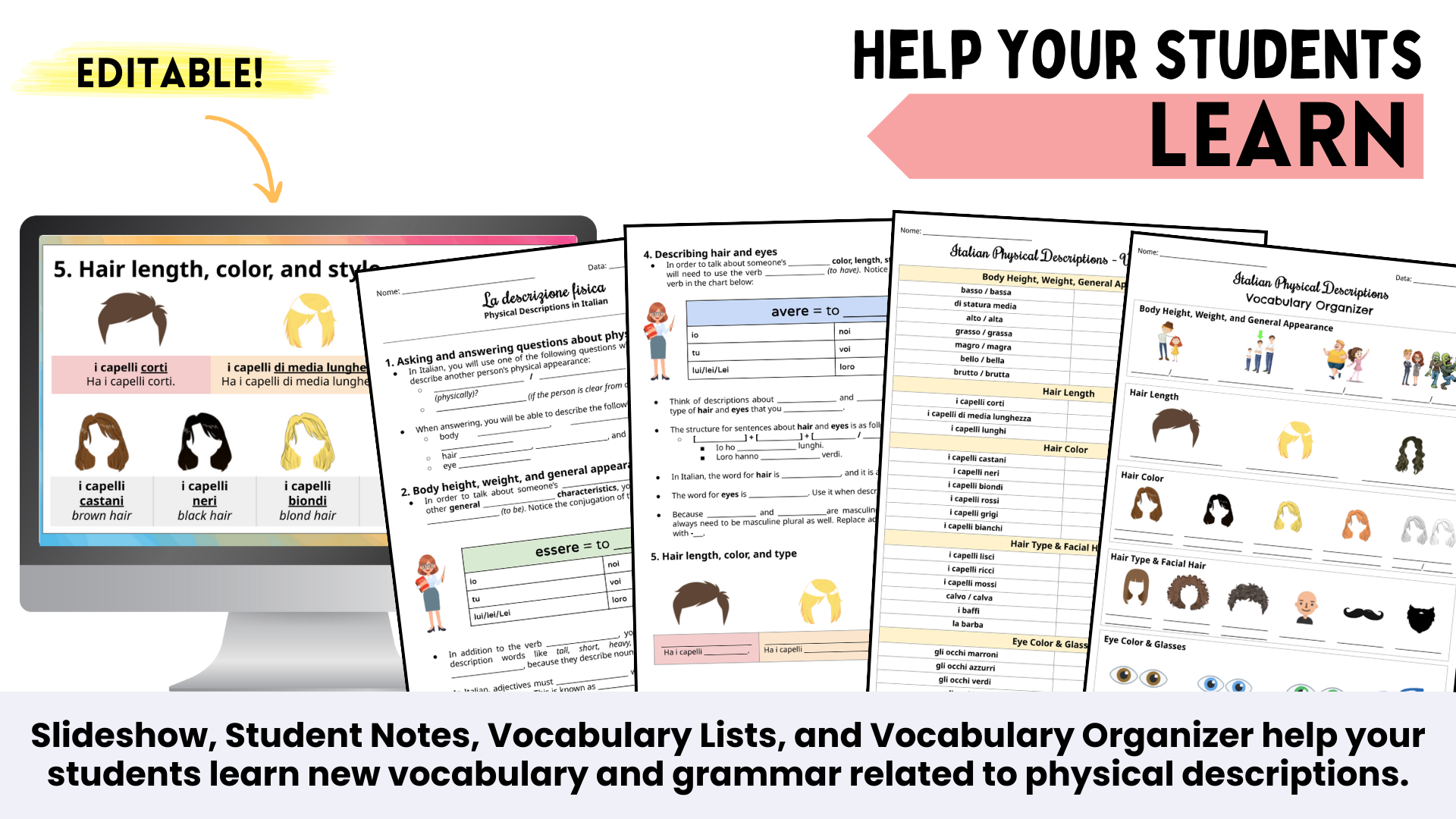
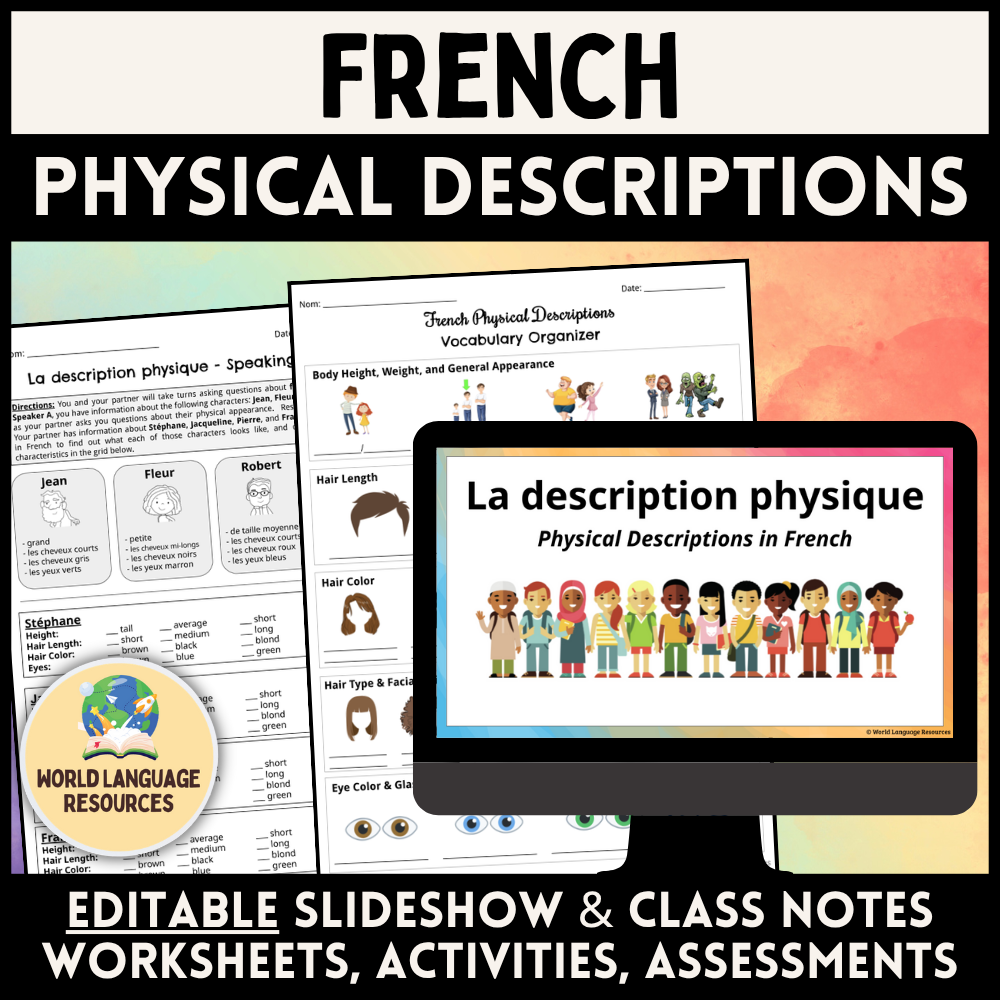
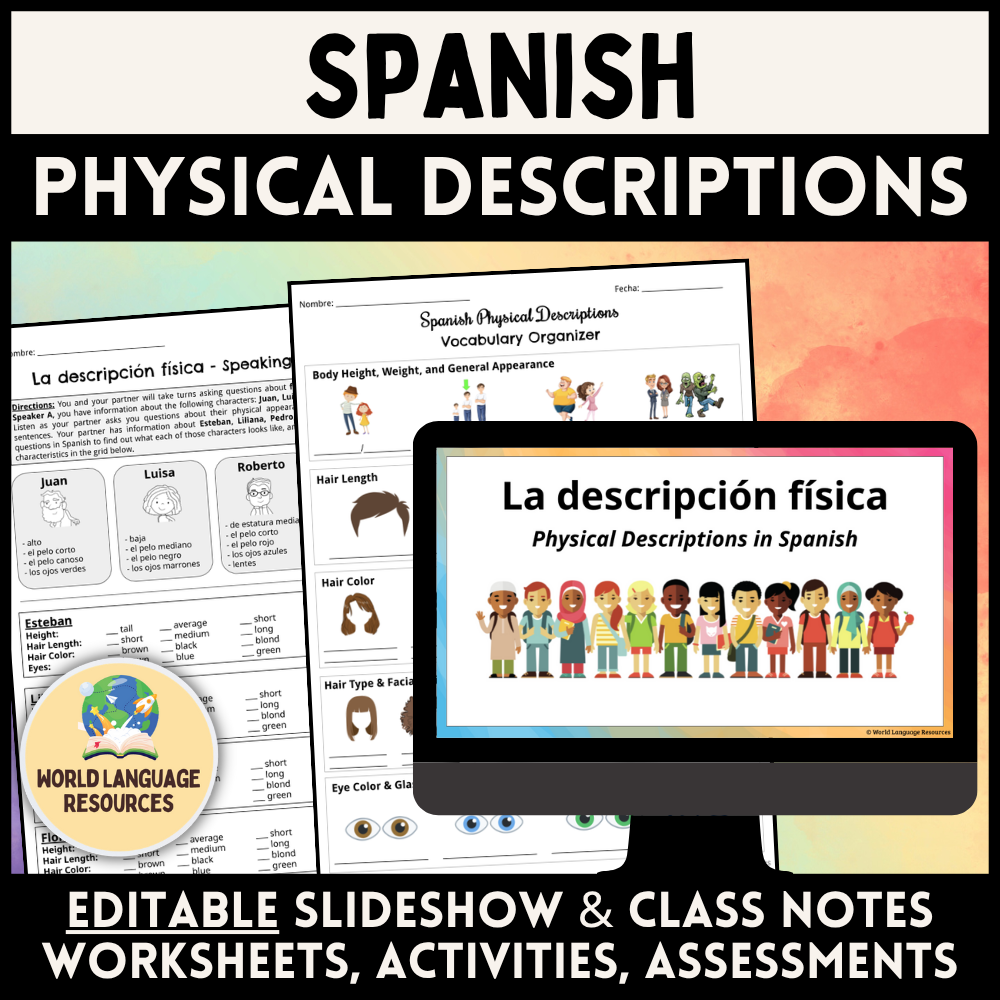
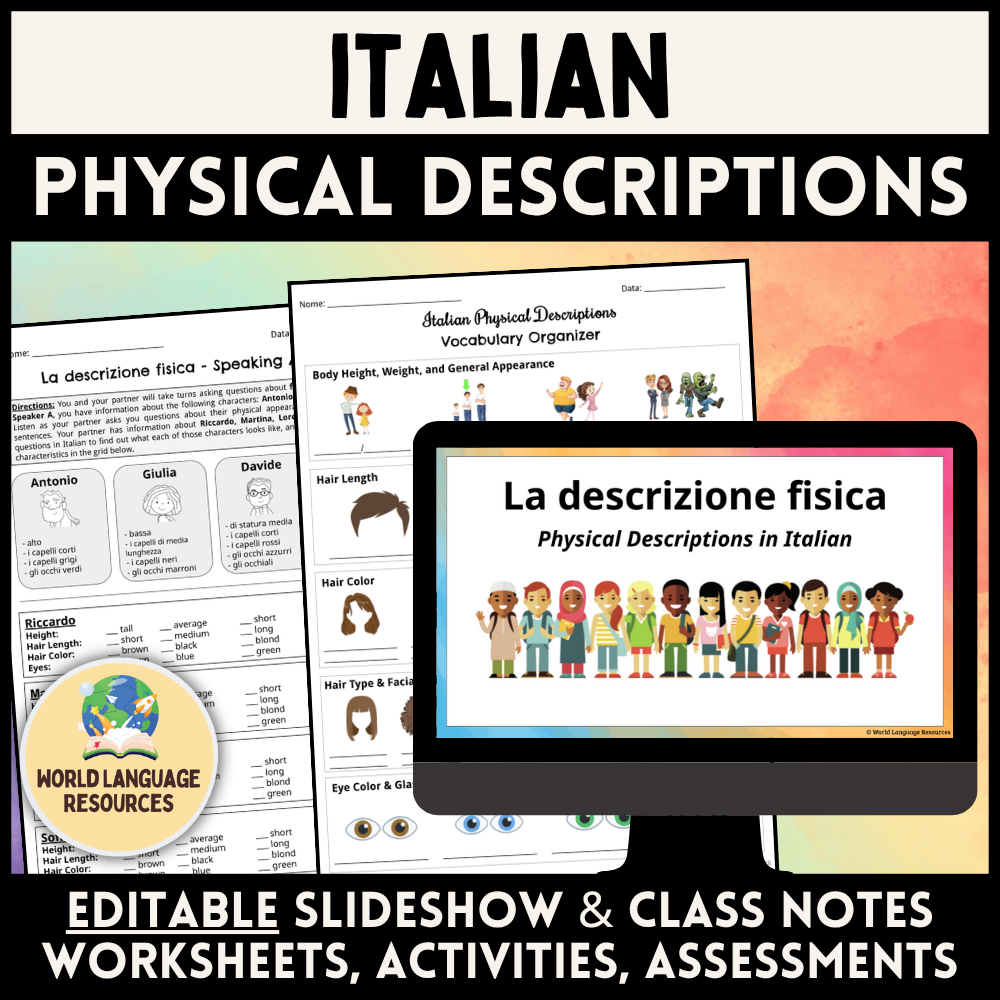
Students will learn how to talk about: height, weight, general appearance, hair length, hair color, hair type, eye color, and glasses. Overall, they will be exposed to a wide range of vocabulary that will allow them to describe themselves, their family, and their friends with relative ease.
How Will My Students Learn?
This resource includes an EDITABLE slideshow that comes with accompanying student class notes, so you can either present the content directly or share the slideshow with students and have them work in pairs or small groups to work through the content.
You’ll also have access to vocabulary lists and vocabulary words & expressions organizers so that students keep all of the necessary vocabulary compartmentalized in an easily-digestible format. These are also great study tools!
Providing Students with Practice Activities
Students need a LOT of practice with Physical Descriptions to achieve mastery. This is my favorite part of the “instructional cycle” - students using what I’ve taught them in engaging and authentic ways… to accomplish a task and communicate and/or collaborate with their peers. So much fun! What types of practice activities can you offer your students?
Well, I like to start off with a practice worksheet (or two! I just photocopy them front/back) that has students implement the grammar they’ve just learned. I’ll then review the worksheet with students using one of the following methods:
Whole-class review: I project the worksheet(s) on the board and have students come up to the board to fill in the right answers. Sometimes I’ll write the answers in myself, but why rob students of the opportunity to write on the whiteboard?!
Peer review: Students work together to correct each other’s work. When students are done, they can come up to the front of the room and grab an Answer Key that I’ve already printed out, so that they can be extra certain that all of their answers are correct.
I’ve also really been into assigning quick and simple digital practice activities to students - low-prep, easy to push out to students, no photocopies needed! I assign these digital activities as classwork OR homework, and I find that they do a good job of breaking up some of the monotony of traditional paper-and-pen tasks/activities.
Here’s a sample of the types of PRINTABLE and DIGITAL practice worksheets and activities you’ll find in my French, Spanish and Italian Physical Descriptions Resource:
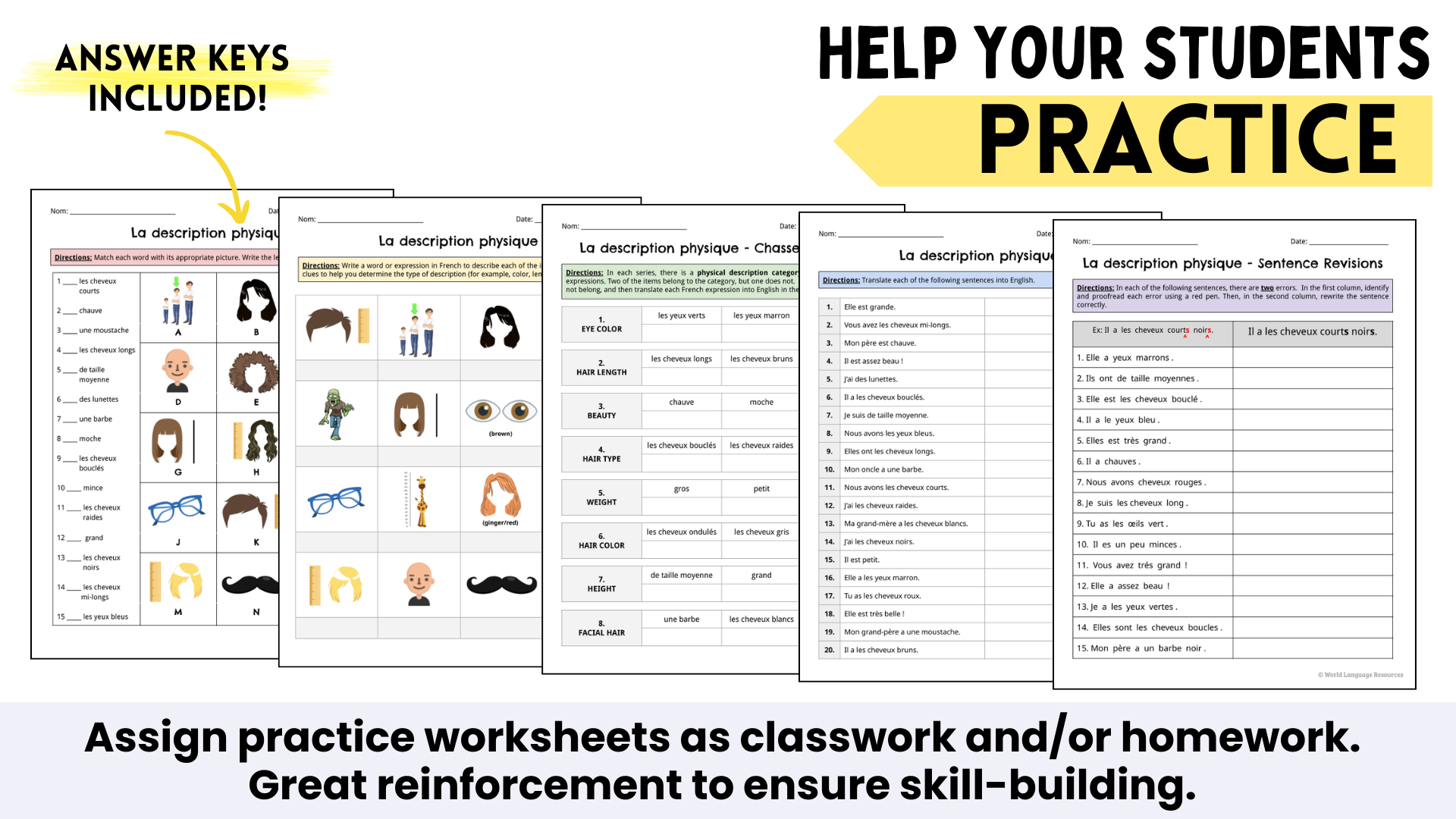
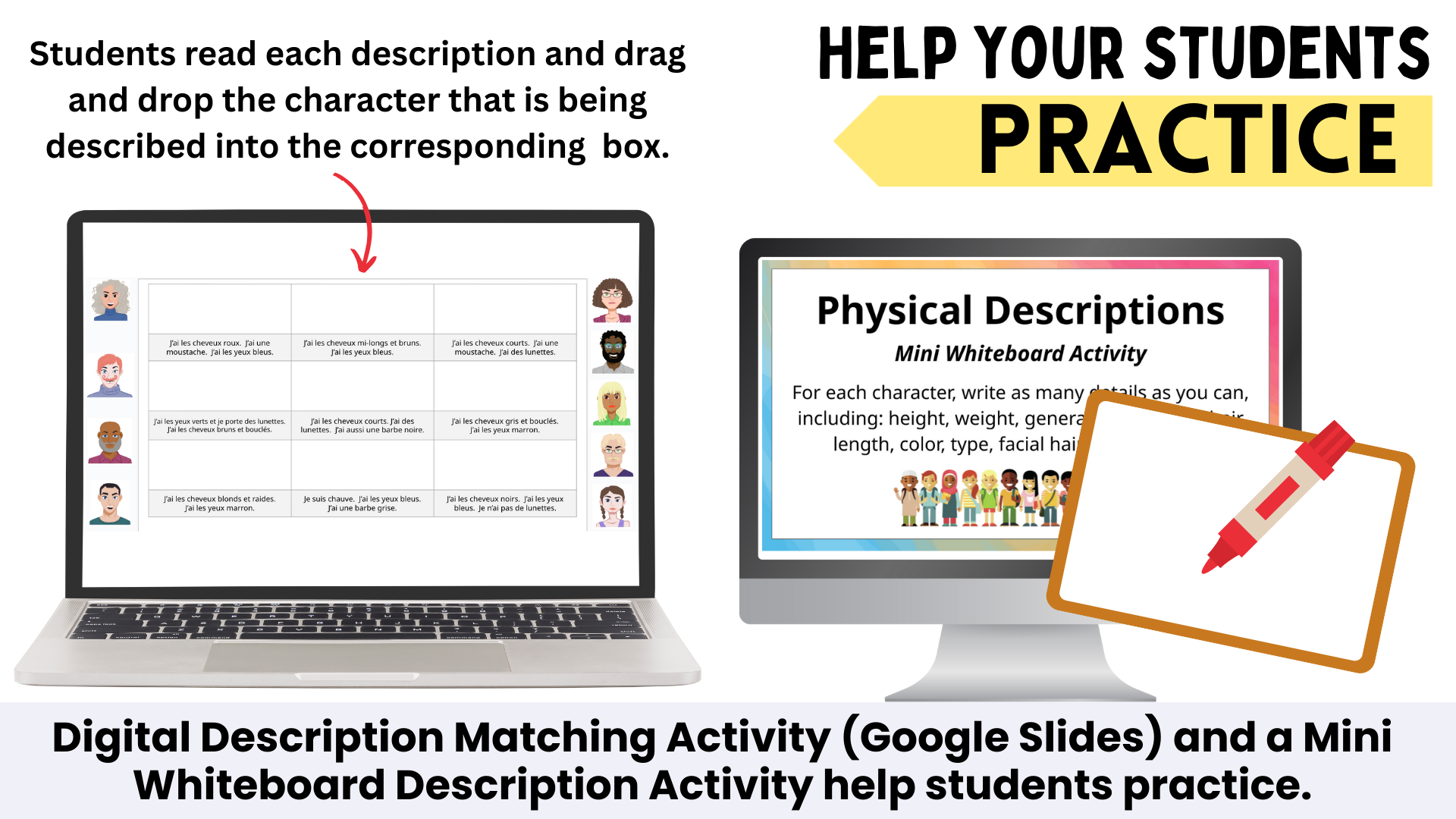
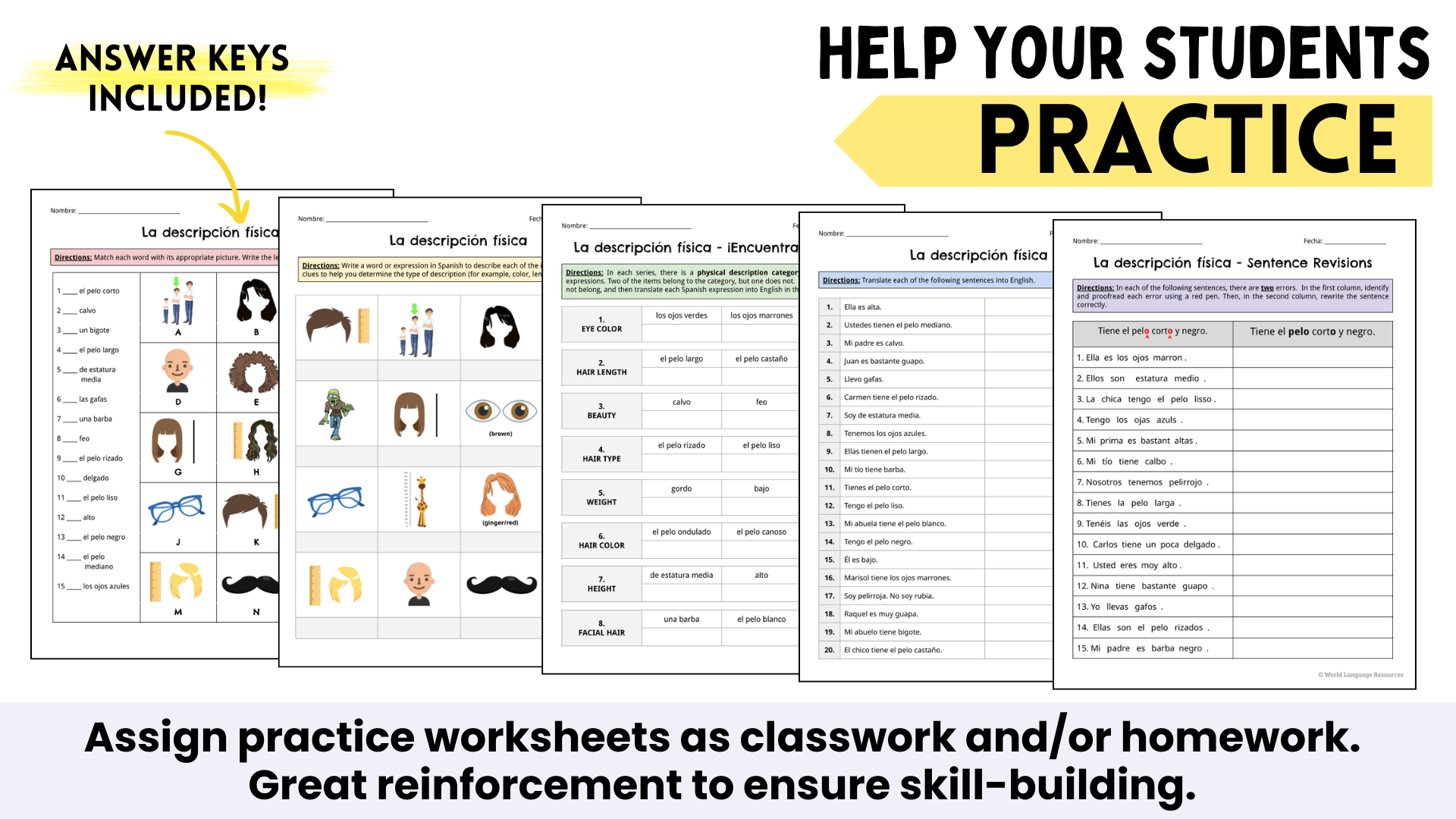
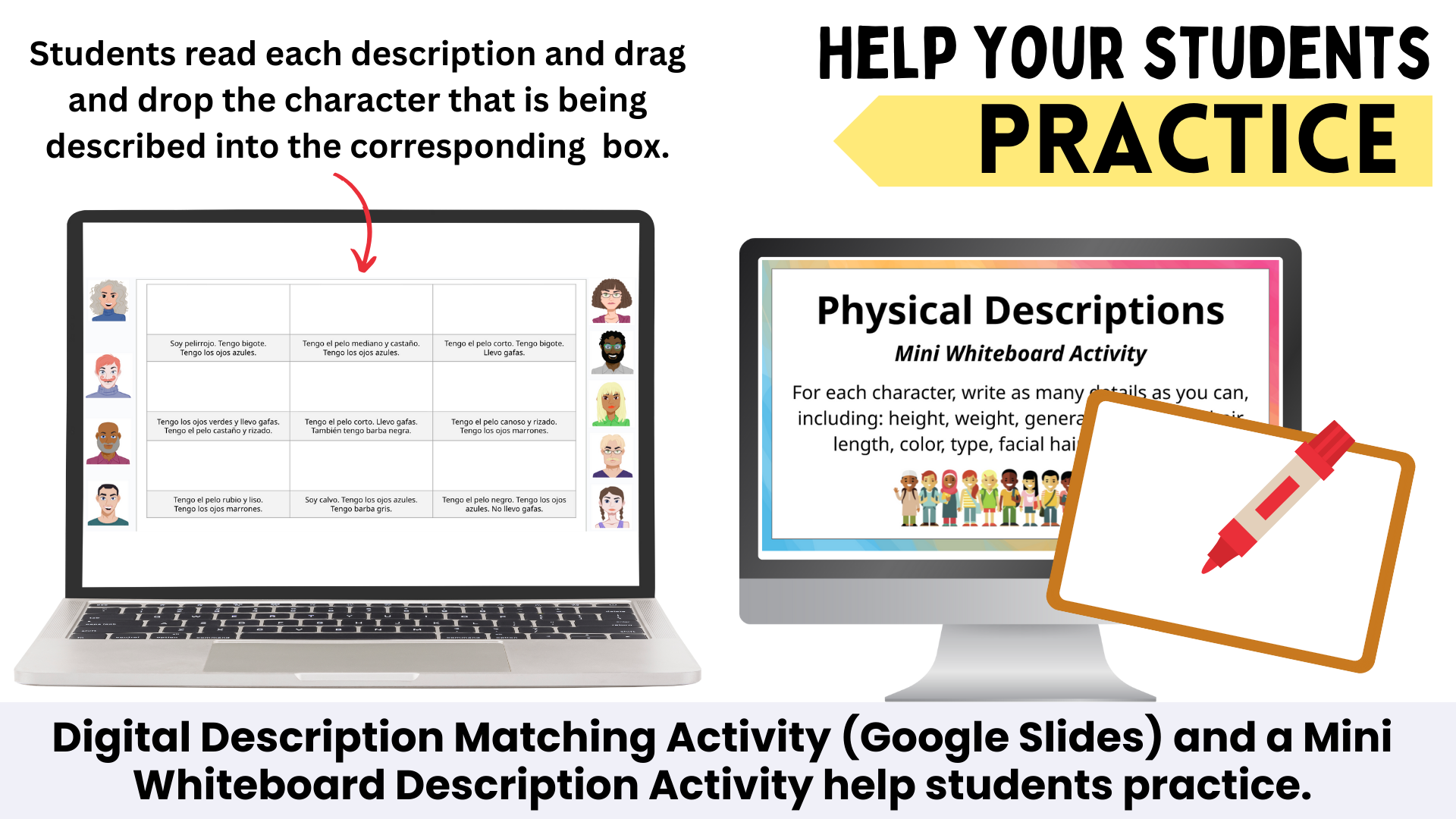
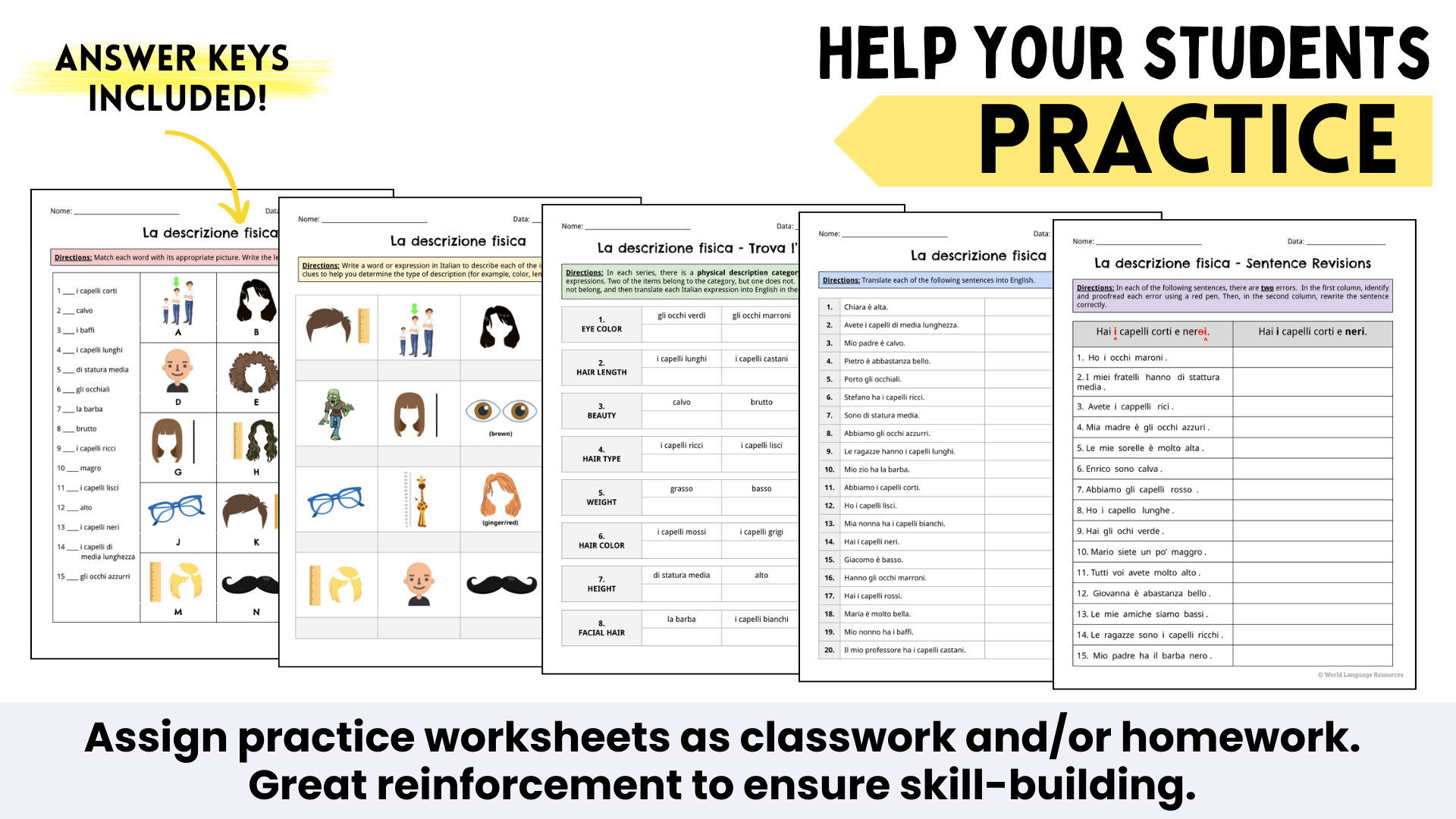
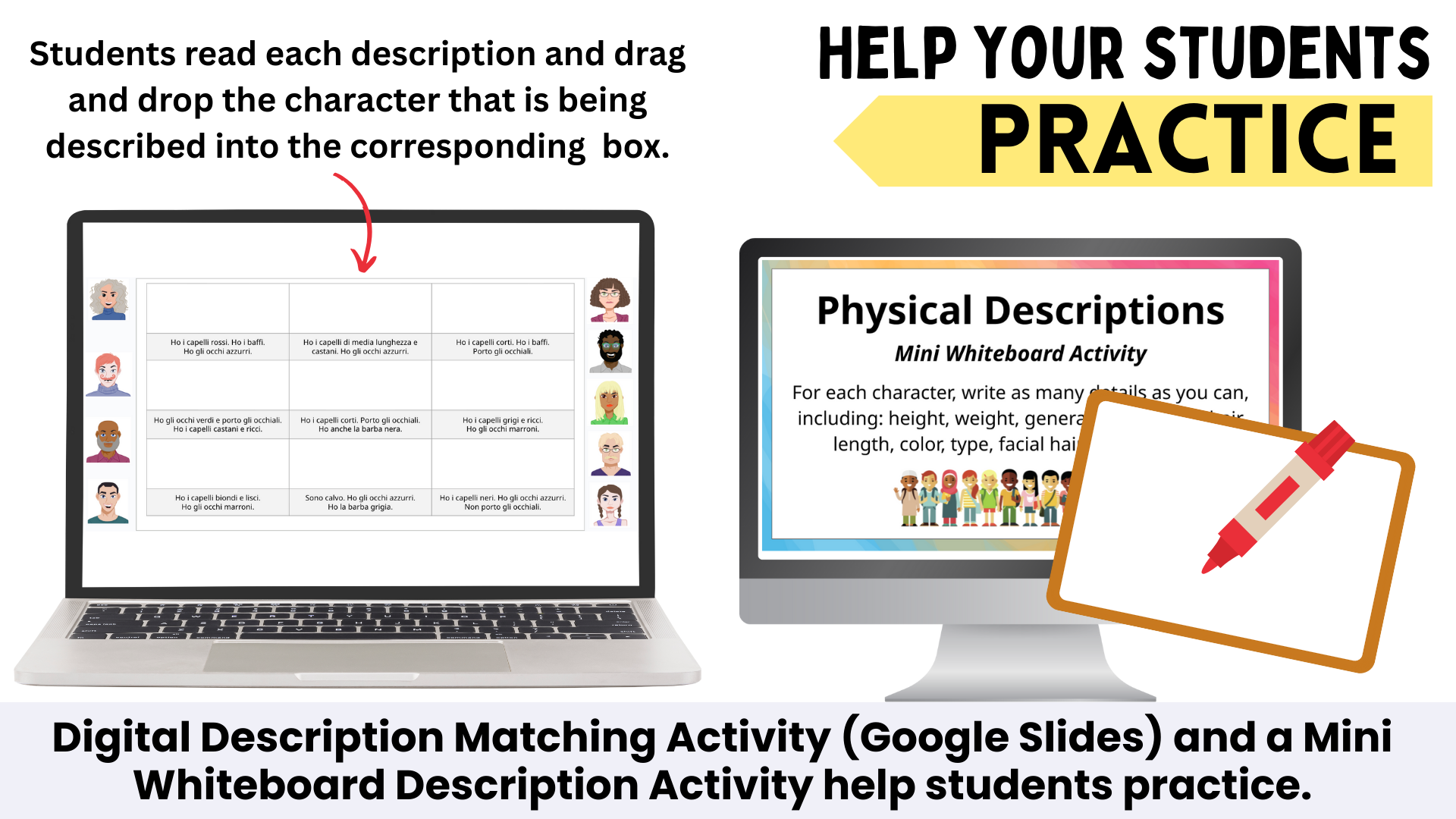
I like to give a few practice exercises for students to complete for homework. In my view, students really do benefit from a bit of extra practice at home to further reinforce the work we’ve done in the classroom. The following class, we’ll start with a Do-Now related to the vocabulary, check the homework assignment, and then play a grammar-related game.
Targeting Student Proficiency
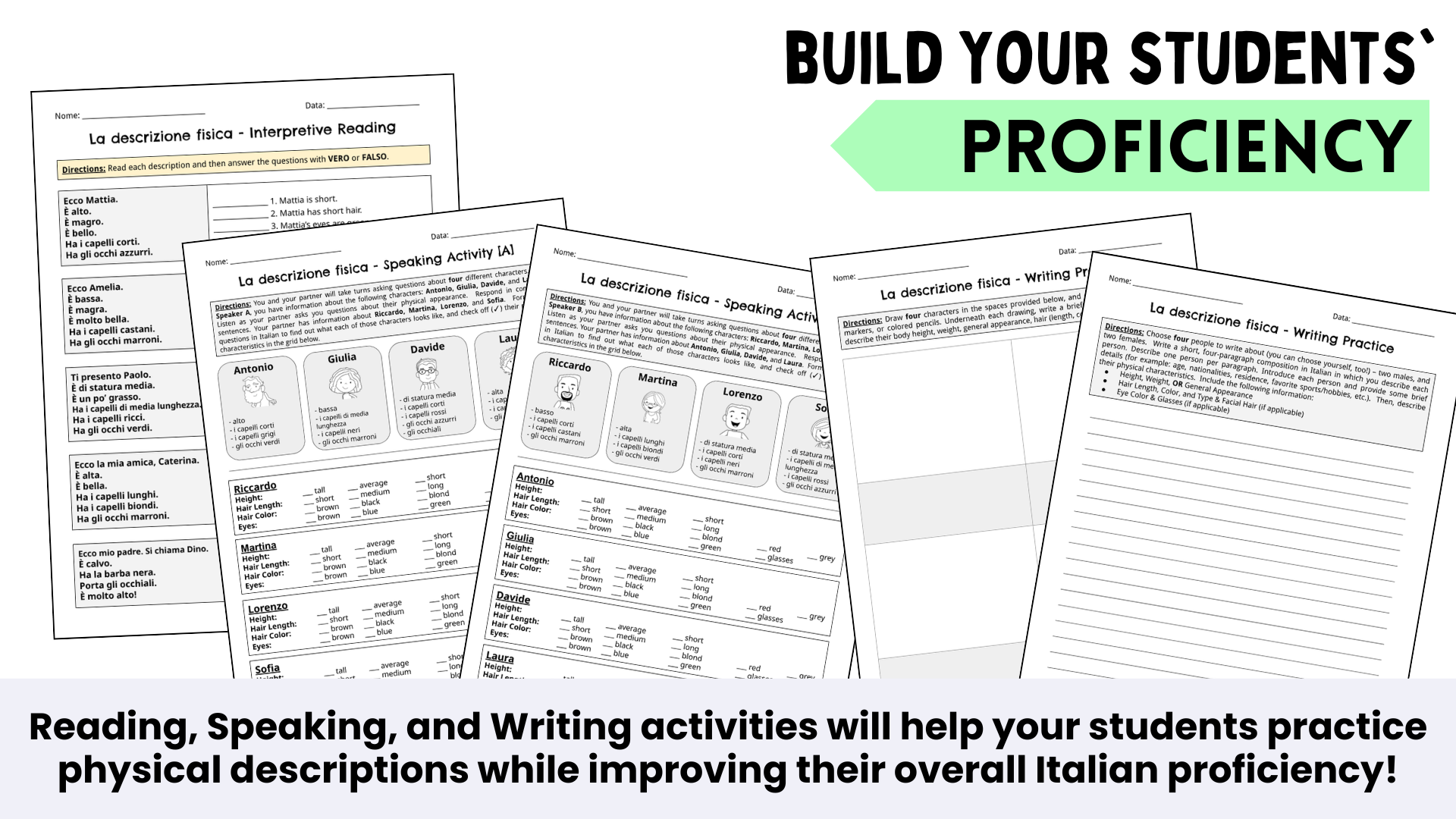
Although practice worksheets and activities are important for vocabulary recall—and we cannot discount the fun and engagement factors in some of these activities, either—they are not the best at building student proficiency.
We want our students to be able to use the language contextually and meaningfully, and so filling in blanks on a worksheet or matching an expression with a picture may not really help students move the needle forward in their proficiency.
To ensure that we are supporting and building our students’ proficiency, it is super important to infuse Reading, Listening, Speaking, and Writing activities into your unit.
In the Physical Descriptions resources, you’ll find reading, writing, speaking, and listening activities to help your students make meaningful connections to the target vocabulary/grammar stuructures they’re learning.
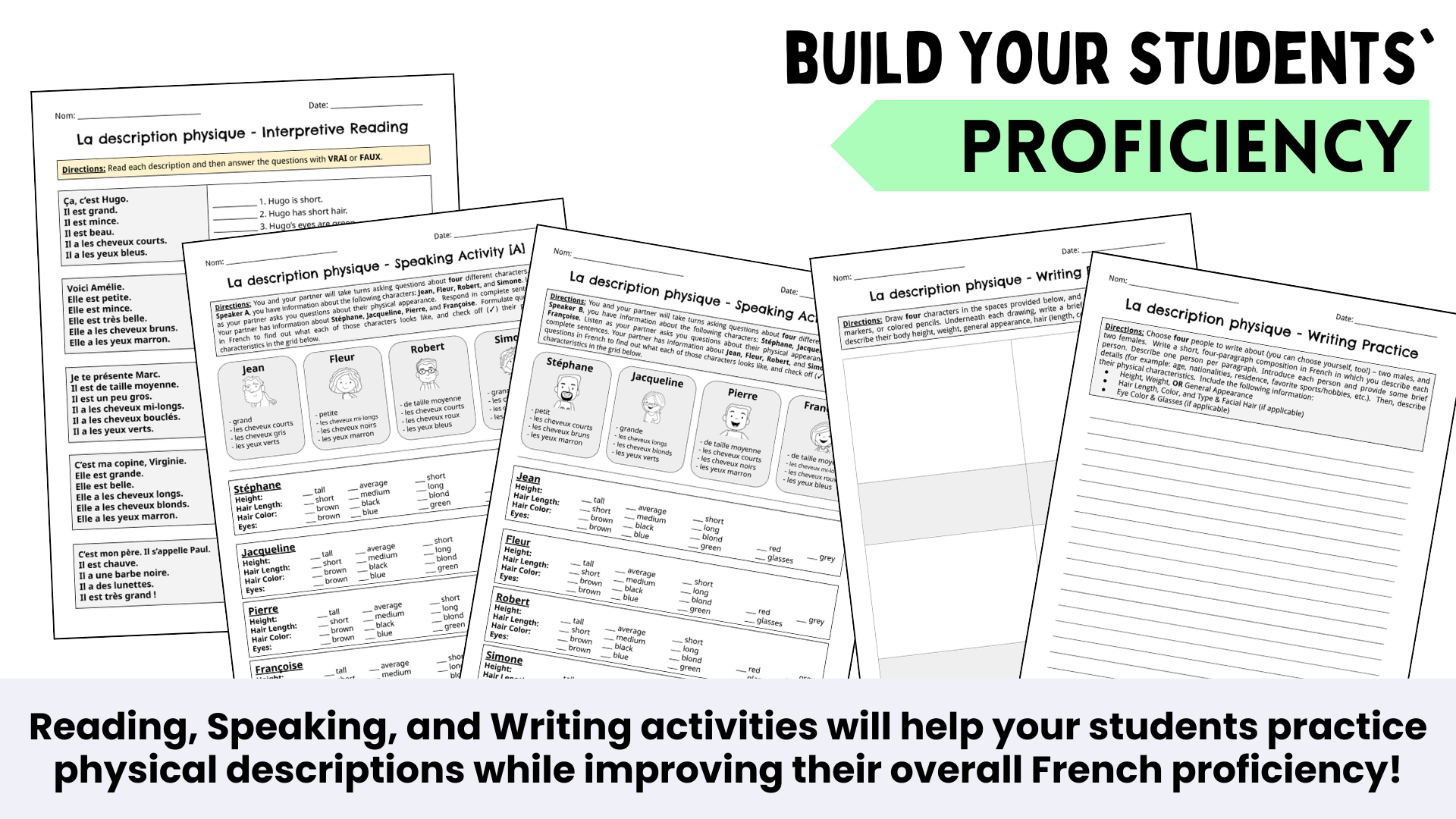
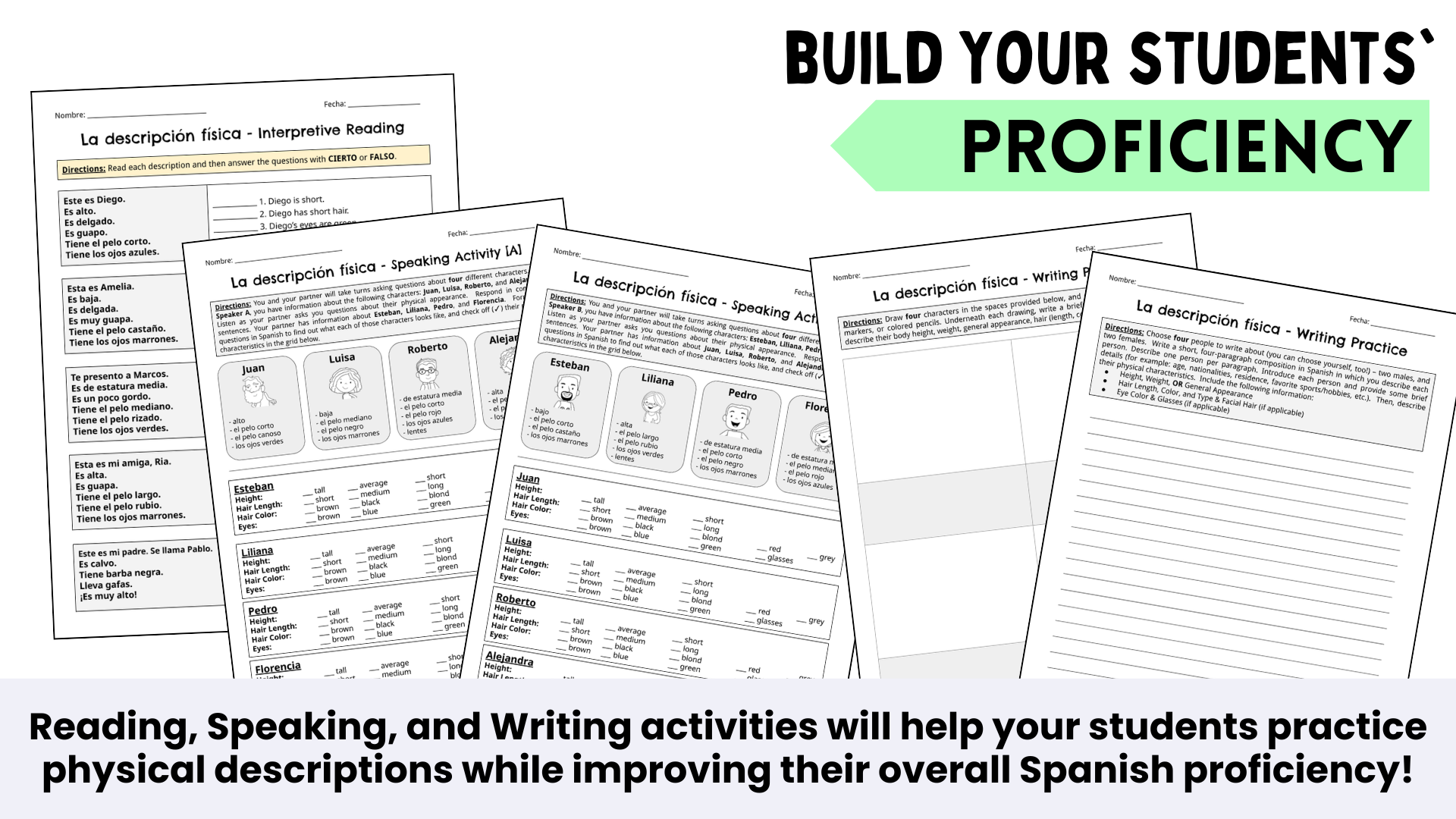
How to Assess Learning
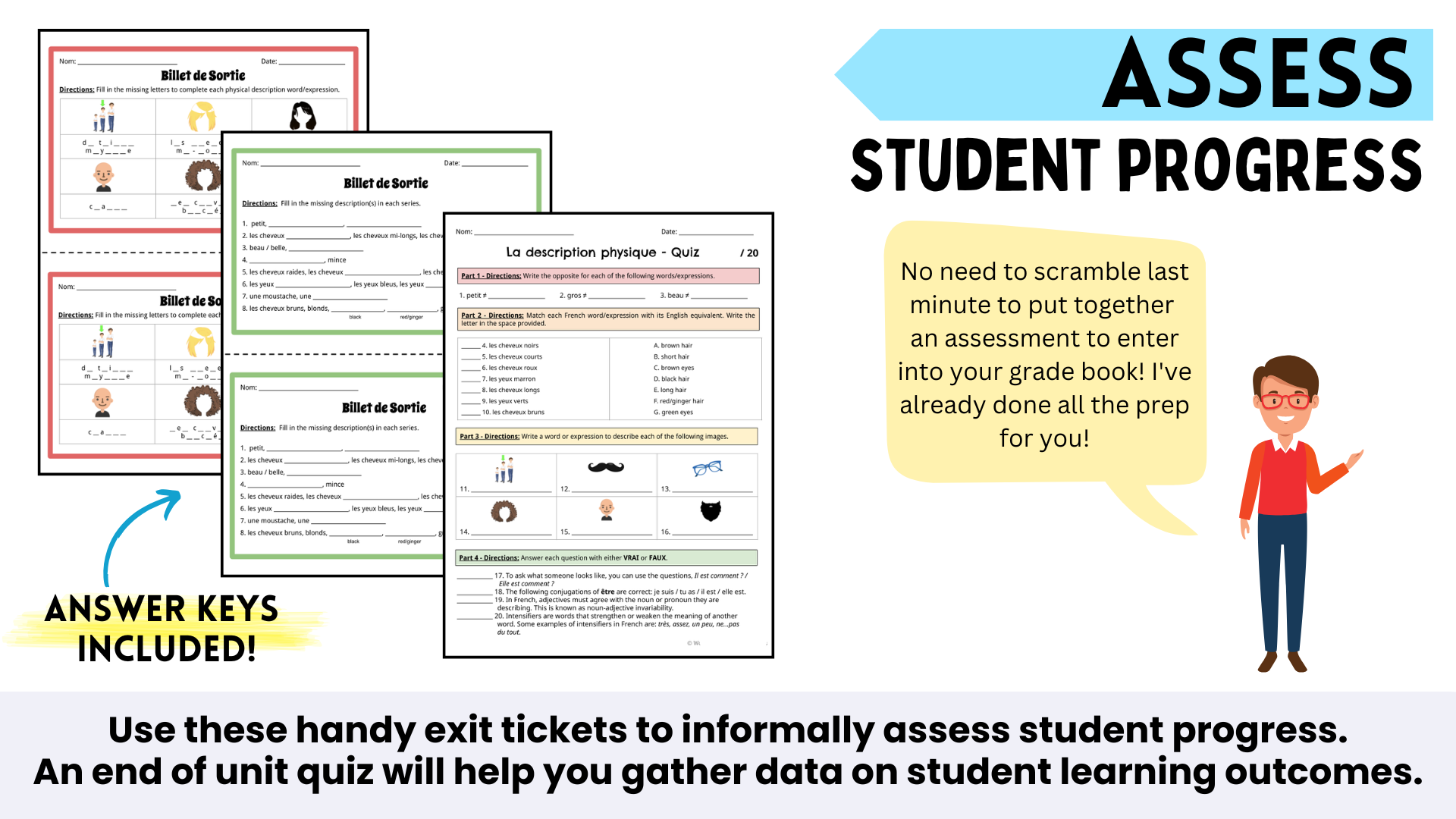
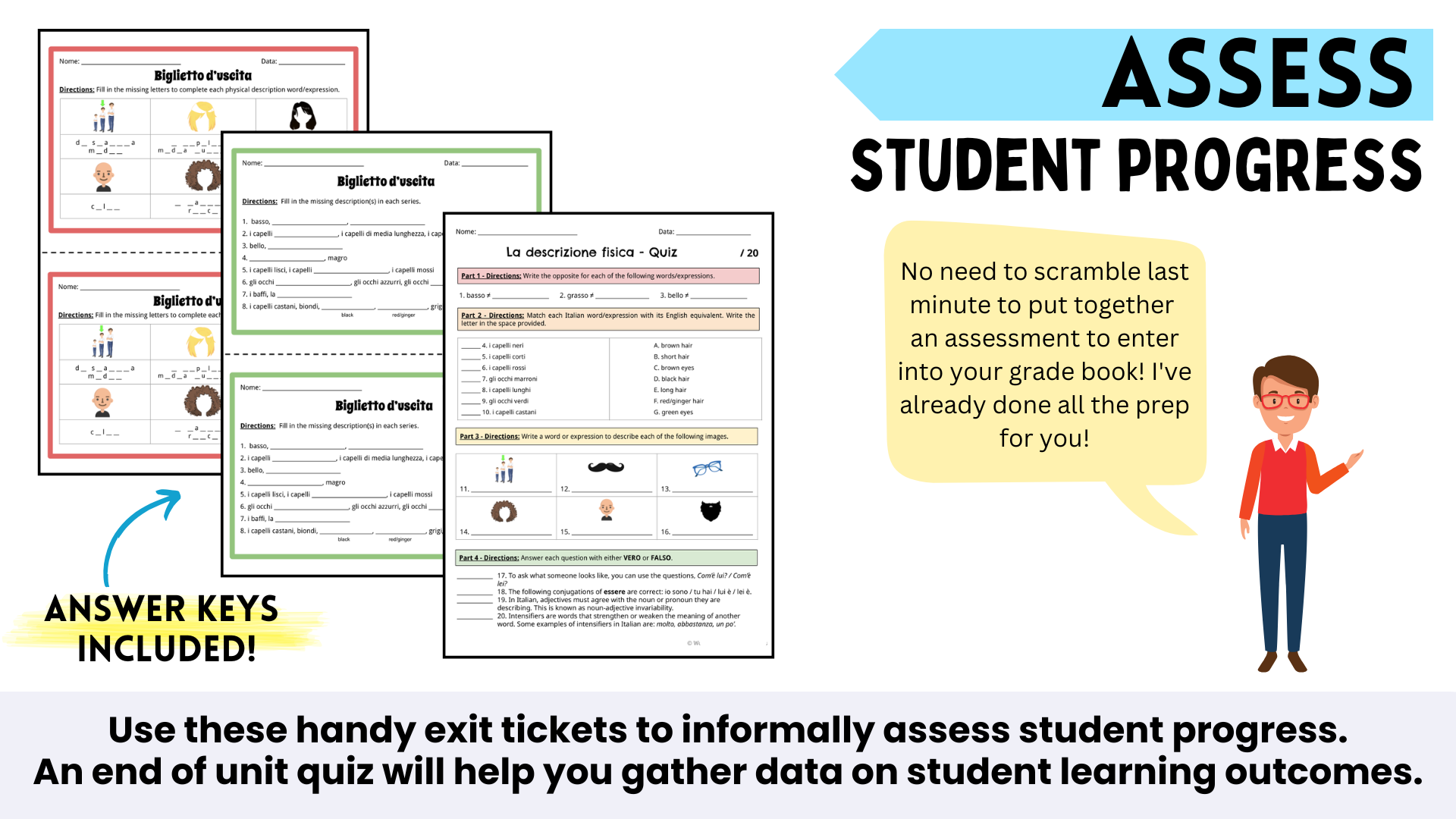
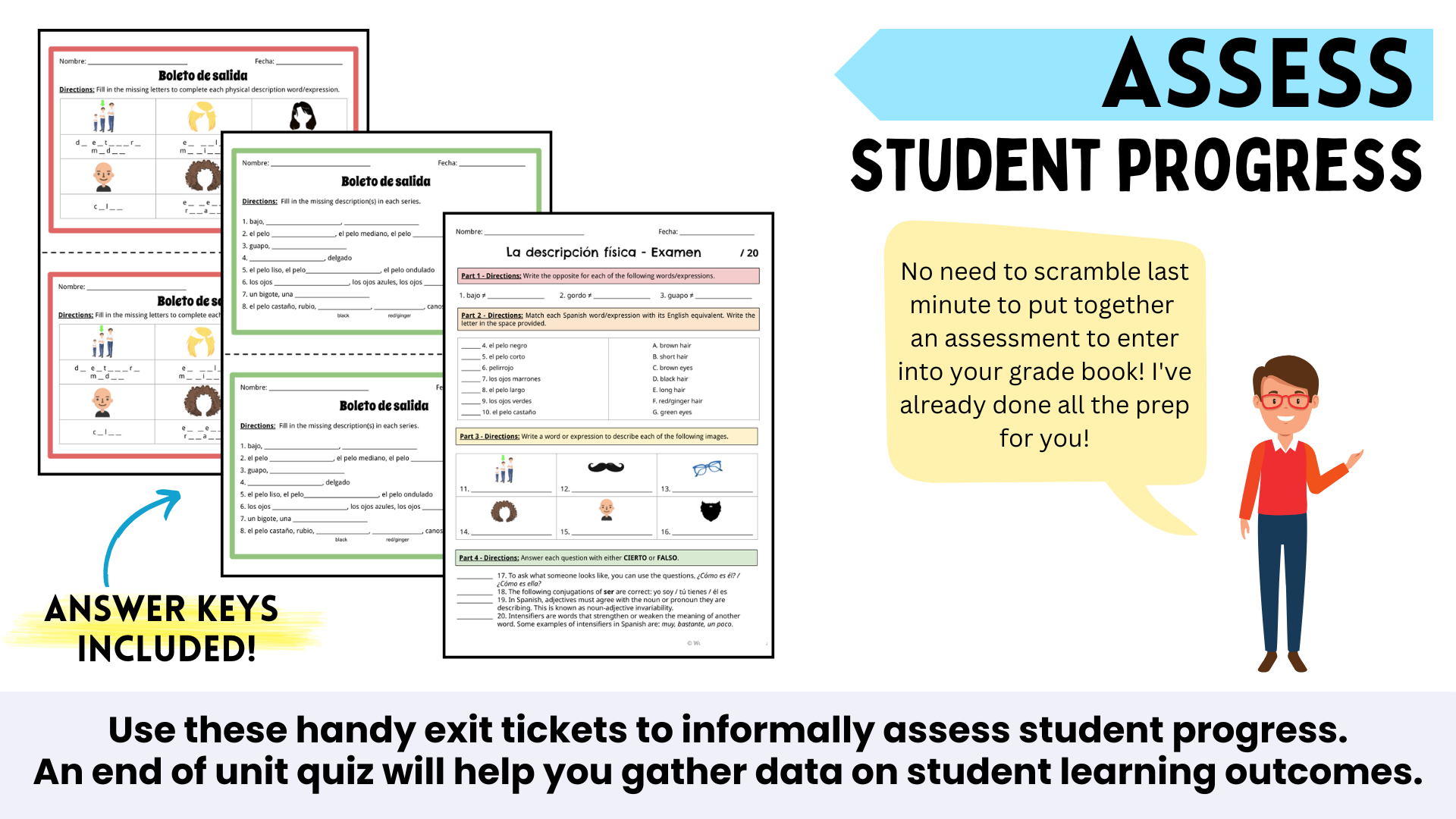
It’s so important to formatively assess your students prior to, during, and after instruction, so that you can gather data on student learning as well as prepare targeted interventions to help remediate students’ knowledge gaps.
I often like to use Exit Tickets post-instruction to see how much students have acquired and retained during instruction - I use the data to inform what the Do-Now of my next class might address. I also use Quizzes to gather data on learning outcomes and ensure that my students are ready to move on to the next piece of the unit.
Pro Tip: You can also use Exit Tickets as Entry Tickets at the start of class!
Ready to help your students learn, practice, and master this critical theme concept in your World Language class?
Want to take a closer look at the resources provided in my French Physical Descriptions, Spanish Physical Descriptions, and Italian Physical Descriptions resources? Check them out on my TpT Store by clicking the thumbnails below!
Also check out… my Guess Who? Activity!
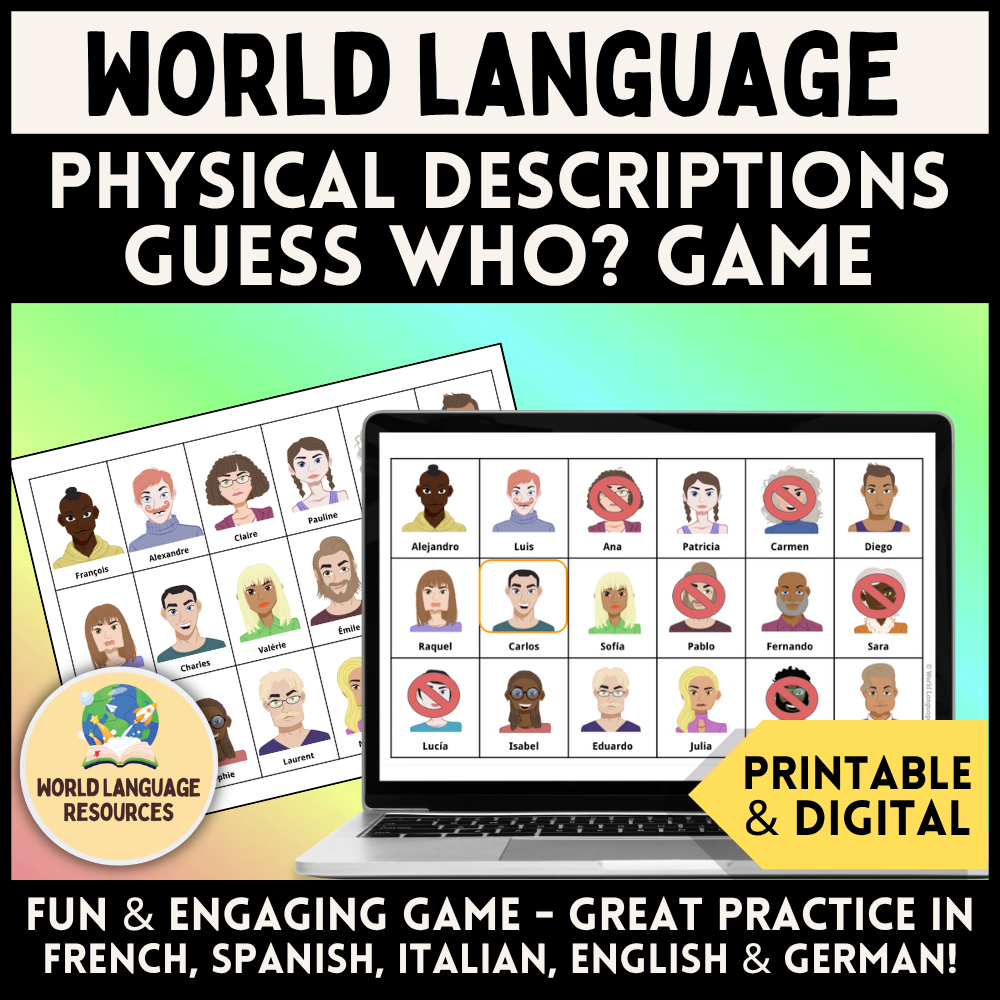
This Guess Who? Game is a great way to help your World Language students practice physical descriptions in French, Spanish, Italian, English or German!
This resource contains a PRINTABLE Guess Who? Game Board in French, Spanish, Italian, German, and English, as well as a DIGITAL version that you can have students play on their computers. Use this activity after you have taught your students how to describe physical characteristics.
Happy language teaching,
~ Michael