Avoid These Five Back to School Mistakes!
The start of a new school year in the World Language classroom is exciting… but it can also feel chaotic, overwhelming, and downright exhausting!
Over the years, I’ve noticed that many of us (myself included!) fall into the same traps during back-to-school season. The good news? With a little intention and a few simple shifts, you can avoid these common pitfalls and set yourself (and your students!) up for a successful, sustainable school year.
Below are the five biggest mistakes French, Spanish, Italian, and German teachers make in August and September. I’ll also include practical, classroom-ready solutions to help you avoid making these mistakes in your World Language classroom while staying grounded, organized, and energized.
Mistake #1: Diving Straight Into Content on Day One
We as World Language teachers are eager! We love our content/target language, and we want to build routines and set expectations quickly. But starting the year with vocabulary lists, verb charts, grammar notes, and heavy linguistic explanations often backfires: students feel overwhelmed before relationships or classroom culture are established.
Another big mistake: going over the syllabus detail by detail! No student wants to sit there for 10-15 minutes reading through a syllabus. Skip it and save it for later! (I actually assign the syllabus for homework on day 1 or day 2 - students and their parents read the syllabus together, they both sign it, and students bring it back for me to check, so I know they and their parents have read it.)
How to Avoid This Mistake:
Use the first few days to build community, classroom norms, and target-language confidence. A few ideas:
Use my French Scavenger Hunt, Spanish Scavenger Hunt, or Italian Scavenger Hunt activity to softly introduce students to content while building classroom community.
Do Interpersonal Speaking warm-ups (simple, low-stakes questions like “Comment t’appelles-tu?” / “¿Cómo estás?” / “Come stai?” )
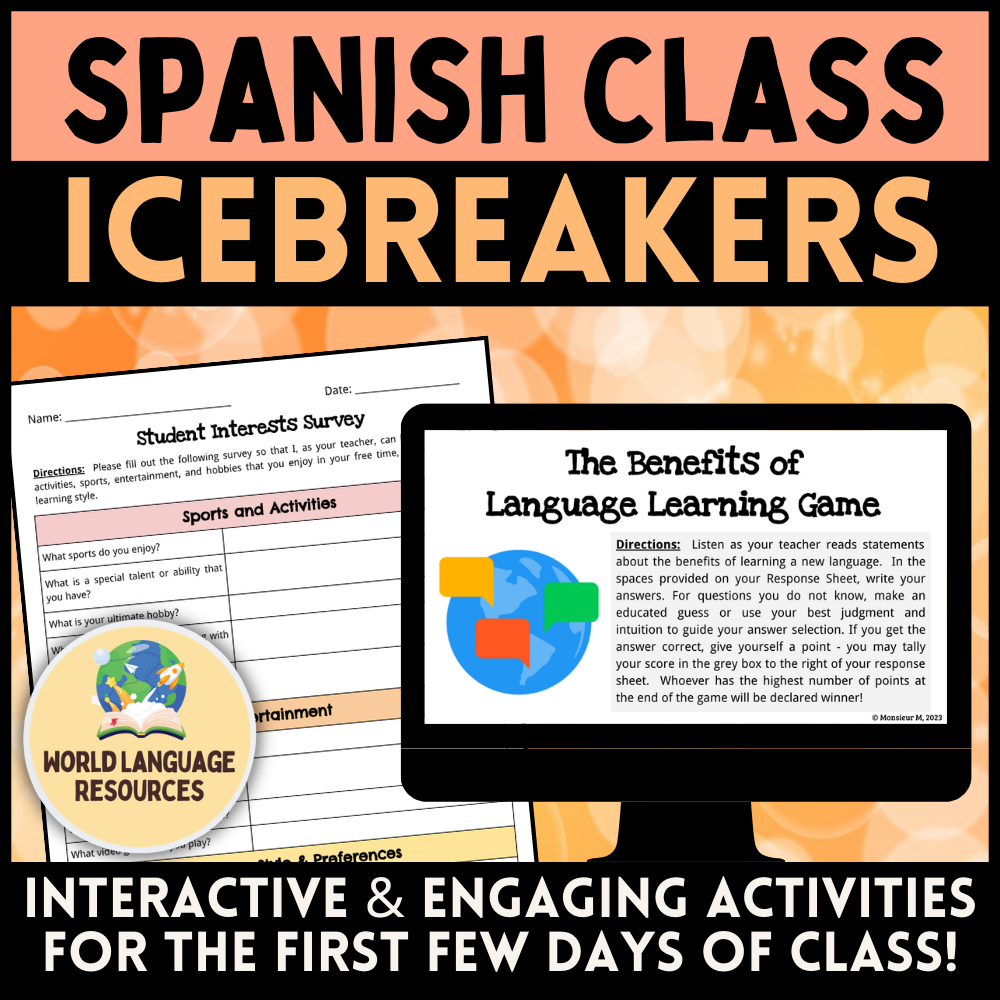
Icebreakers, icebreakers, icebreakers! We as adults don’t love them, but I’ve got some great ideas in my French, Spanish, and Italian Icebreaker resources - check them out below!
Incorporate movement-based activities like Find Someone Who (even if it’s not in the target language! That’s okay!)
Introduce yourself in the target language with visuals and gestures.
Save the content for the second week of school… your students will be much more receptive!


Mistake #2: Not Teaching Students How to Use Classroom Resources
We spend hours creating beautiful word walls, reference sheets, digital notebooks, absent bins, enrichment activities for early finishers, and anchor charts… and then we assume students will know how to use them. Spoiler alert: they won’t. If you don’t explicitly model how to use your classroom supports, those tools become decorations instead of learning assets.
How to Avoid This Mistake:
Take 10–15 minutes during Week One to explicitly walk students through every resource you expect them to use. I like to introduce one new resource/support per day (usually takes about 5 minutes to explain). Show them…
where your Lost and Found is.
where your Absent Bin is located. (I use an absent bin in which I store student worksheets/assignments - students know they should check the bin upon their return to school and pick up any materials they missed. You don’t have to use this method, of course, but show your students where to go when they need to pick up missed work.)
where your pencil sharpener and other classroom supplies are located.
how to use classroom visuals (word walls, posters, etc.) effectively.
Students who know how to use these tools actually will use them! And it also saves you the headache of having to explain to students where things are located. (I swear, every year I have students in March who are like, “Uh… where’s the lost and found?”)

Mistake #3: Burning the Candle at Both Ends
I’ve spoken extensively on this blog about the importance of self-care, in particular maintaining boundaries and not over-extending ourselves. Back-to-school season has a way of convincing us that we need to stay late, answer emails immediately, and say yes to everything. That’s a fast track to exhaustion before the year even starts - don’t do it!
How to Avoid This Mistake:
Create non-negotiable boundaries for the first eight weeks. Some ideas WL teachers might find helpful:
Choose a hard stop time for leaving school. “I’m leaving school at 4 p.m. every day.” And actually stick to it. There’s always more work to be done, but we can’t pour from an empty cup. Save it for tomorrow.
Reply to emails during a set period of time, not individually as you receive them. Find out what your school’s policy is on response time. If your admin gives you a 48-72 hour window to reply to students/parents, use it! And another thing: consider removing your school email from your phone. My experience is that there’s really never a good reason to have school email on your phone. Not only does it put you into “work mode” when you’re technically off the clock, it makes it so that you never truly leave school at school. If we can’t allow our minds and nervous systems to disconnect and decompress, we’re actually fast-tracking ourselves to burnout. No one needs that in September!
Plan at least one non-school activity every weekday (gym, reading, walking, etc.). This makes a huge difference. We’re teachers, yes, but we are also human beings with genuine interests, hobbies, and pastimes. Don’t let your passions fall by the wayside, especially not during a busy season like BTS.
Your energy is the engine of your classroom. Protect it fiercely!
Mistake #4: Overplanning (aka Trying to Do Everything at Once)
It’s so tempting to have every unit mapped out, every activity prepared, and every copy made before students even walk through the door. But the truth is, overplanning leads to burnout fast. The first weeks should be calm and flexible, not filled with self-imposed pressure to be “perfect.”
If you plan for the first week of instruction before students walk through your door, I’d say you’re already doing great! You don’t have to have the whole quarter mapped out - focus on a healthy, sustainable, week-by-week lesson plan routine.
It’s also tempting to try to cram in a million different activities into our lesson plans. Stop that! Students will appreciate it if you take it slow. Most of them don’t fully get into the school routine until the third or fourth week of school, anyway. Slow things down, and focus on the essentials.
How to Avoid This Mistake:
Plan to prep for one week at a time. Unit plans and pacing guides are helpful, so you know where you’re going. But don’t feel like you need to have the entire quarter mapped out before school even begins.
It’s always helpful to have spare activities in your back pocket in case a lesson runs short, so over-planning in that sense is not necessarily a bad thing. But trying to cram too much into a single lesson or unit is a recipe for disaster. Especially during the first few weeks of school: go slow, build classroom rapport, engage students in the language-learning process, and most importantly: get them excited to learn with you!
Mistake #5: Using Target Language Inappropriately
Okay, this one is going to be tricky to explain, because I’m going to sound like I’m contradicting myself. We cannot rush into using the target language for an entire class period - no English, at the very beginning of the year. (In fact, we may not be able to do that at all during level 1 and maybe even level 2… for more on this, check out my blog post: How much Target Language should I use?). This is incredibly overwhelming to students (both cognitively and linguistically), and it’s a surefire way to get them to not really love your class. What do most students do when they feel like they are in over their heads? They check out.
Now, on the flip side, we cannot use 100% English either! We need to carefully expose to students to the target language so they start familiarizing themselves with hearing a new accent, new words, new speech patterns.
How to Avoid This Mistake:
Limit TL time. Maybe it’s 10 minutes per class (in total) for the first few weeks. Then you gradually increase it as students build confidence and competence.
Use TL purposefully. We don’t need to be explaining complex topics/ideas in the target language, especially not to our novice language learners. It always kills me when I see teachers explaining activity directions in the target language, and then they wonder why their students are lost. It is not appropriate to go full 100% TL on day one - it’s incredibly jarring for students, and it’s not a good use of precious class time. If you’ve got a nice scaffolded story for the first day of French, Spanish, or Italian class (the ones I used are linked below!), then you can definitely use the TL quite a bit. But if you’re explaining your homework procedures on Day 1 (which we know we shouldn’t do~!) in the target language, you’re not actually communicating with students: you’re producing noise.
Go slow & check for understanding. If you think you’re speaking slow and repeating yourself, go even slower and repeat even more! Students benefit from repetition, and ensuring student comprehension of messages is so incredibly important in building trust and confidence. You want your students to trust that yes, learning a new language is hard and maybe even scary, but you’re in this with them.
I tell my students very clearly: “If I say something and you don’t understand it, it’s not your fault… it’s mine! It’s literally my job to make myself understandable to you in the TL… but it’s also your job to let me know when you don’t understand!”
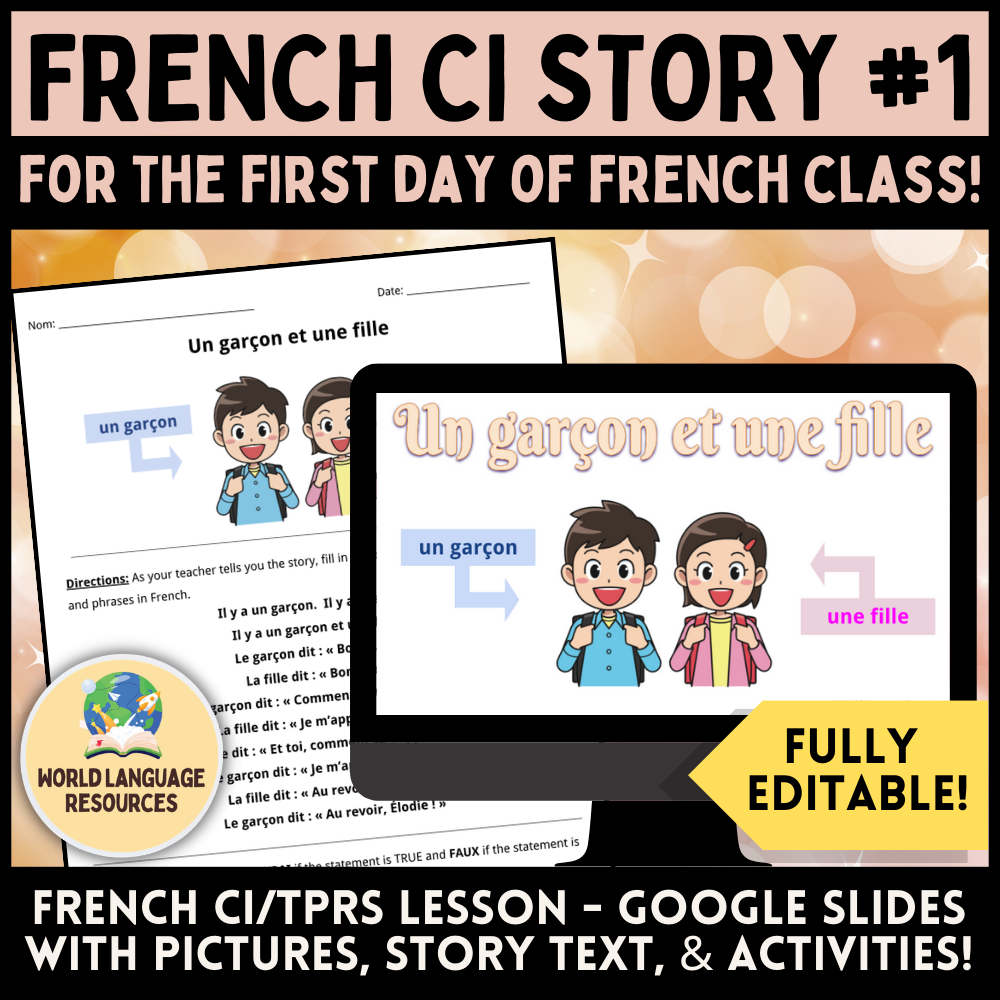
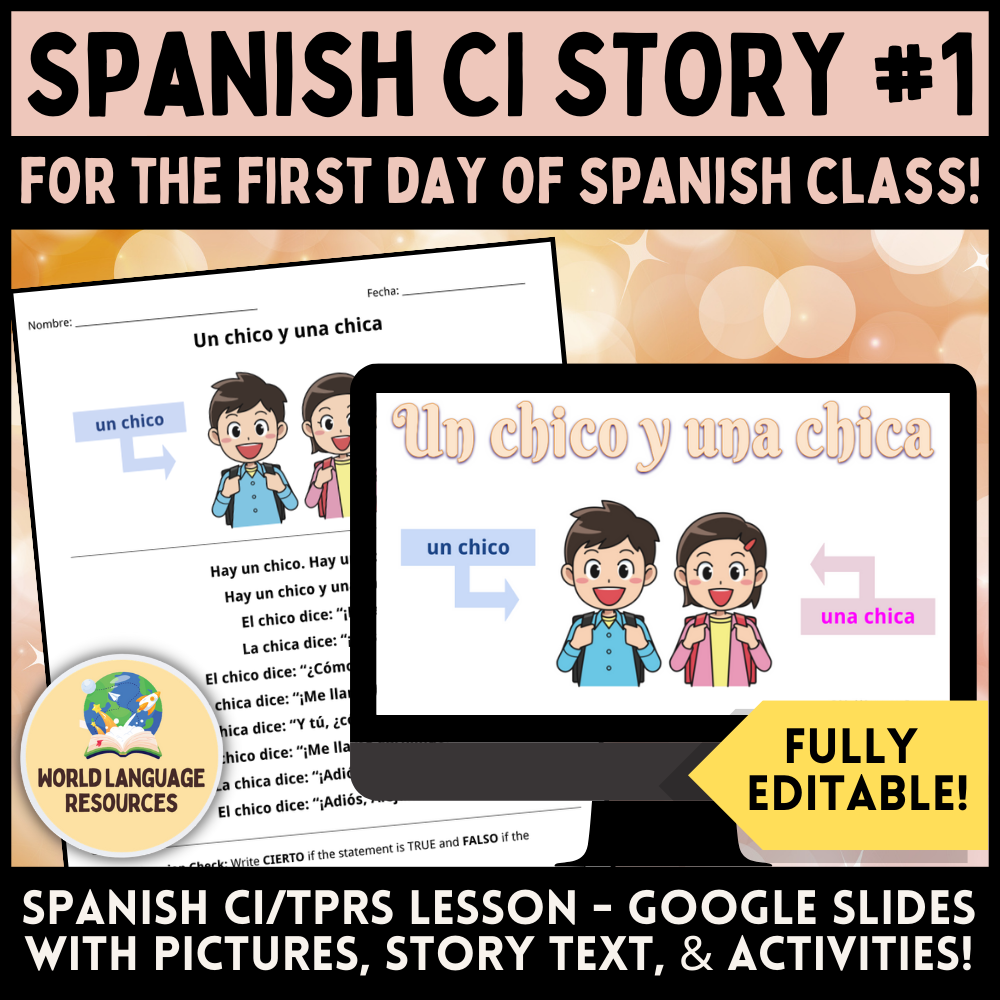
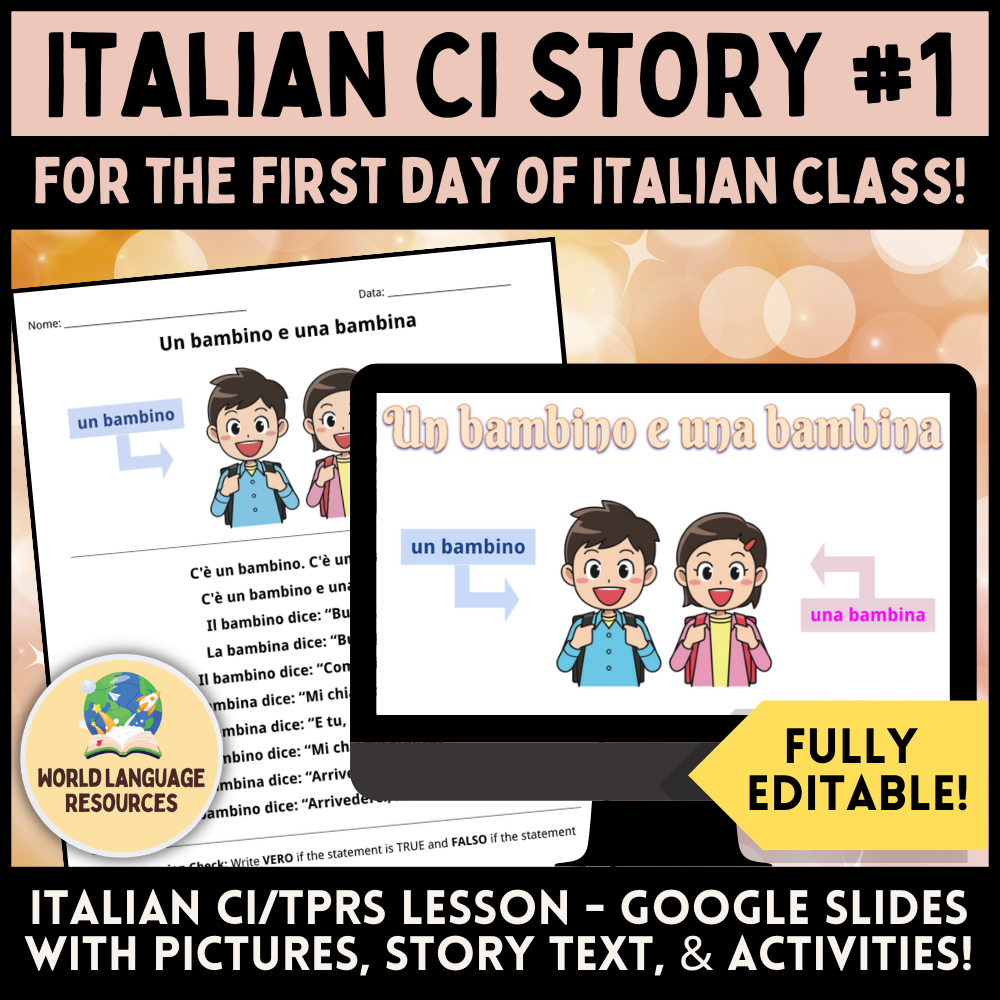
Are you looking for the perfect story to tell your students on the first few days of Italian class? These Comprehensible Input (CI) & TPRS stories are geared toward beginner French, Spanish, and Italian students and will help them build the confidence to be able to READ and UNDERSTAND a short story in Italian during the first few days of class!
August and September set the tone for your entire year. When you avoid these five common mistakes, you create a calmer classroom environment for both you and your students.
Back-to-school season doesn’t have to feel frantic. With the right mindset and a few thoughtful routines, you can start the year grounded, energized, and ready to support your language learners in meaningful ways.
Happy language teaching,
~ Michael